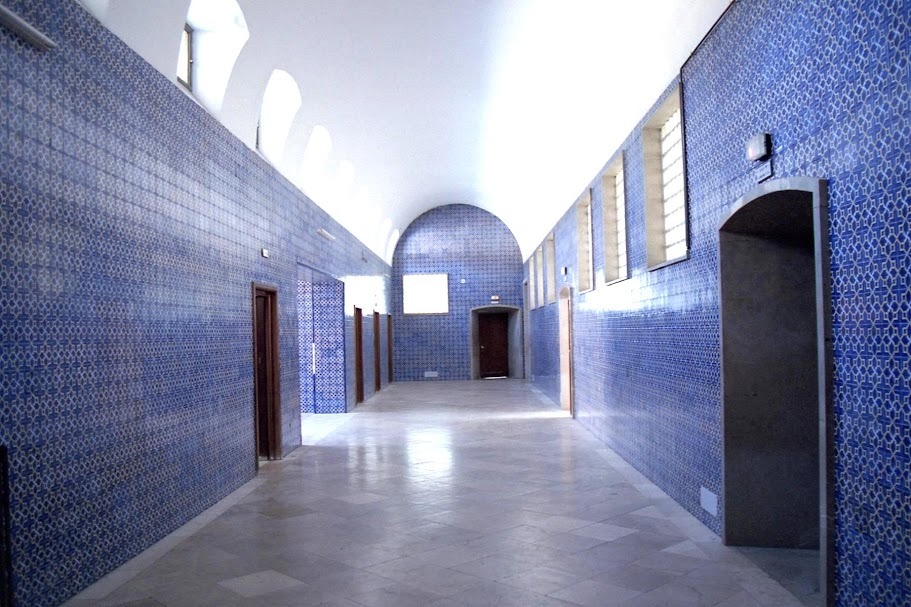

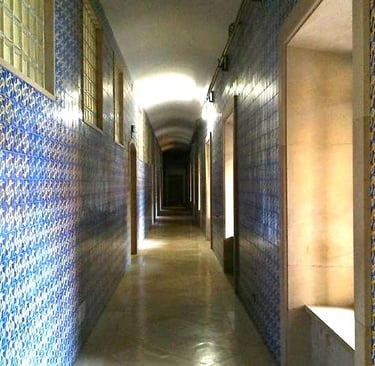
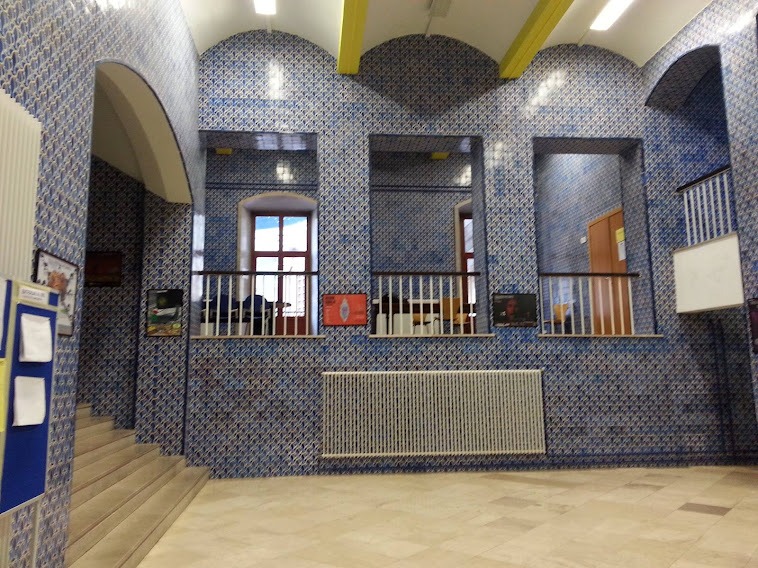
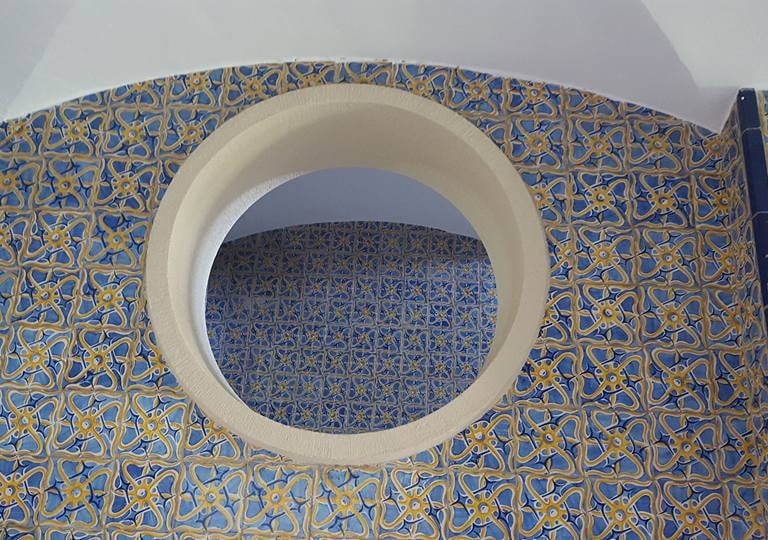
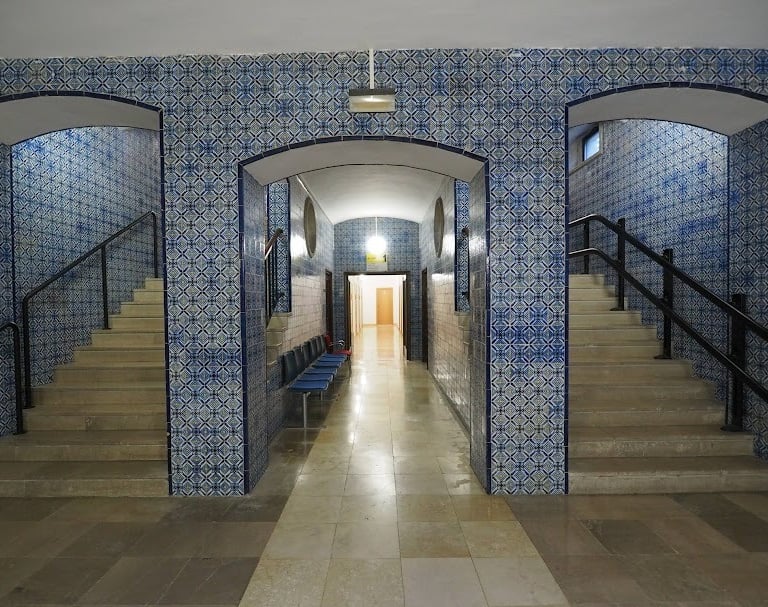
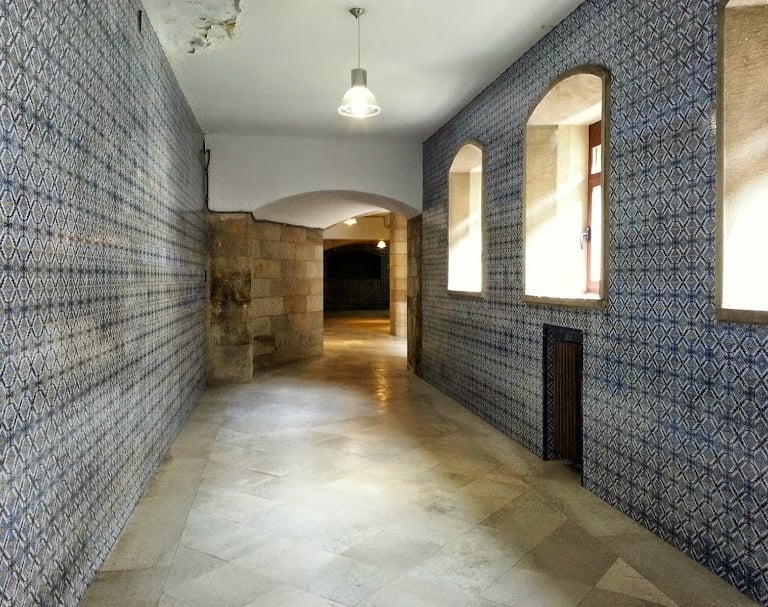
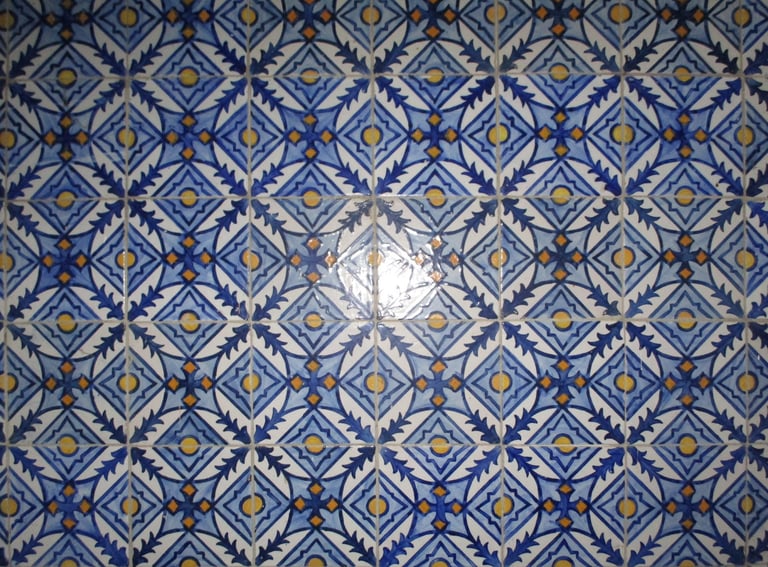
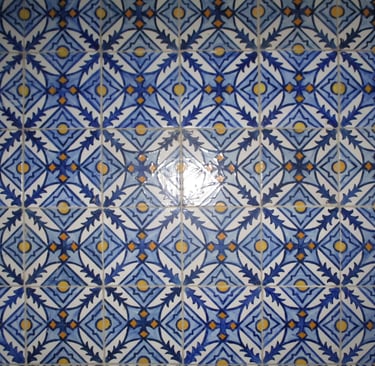
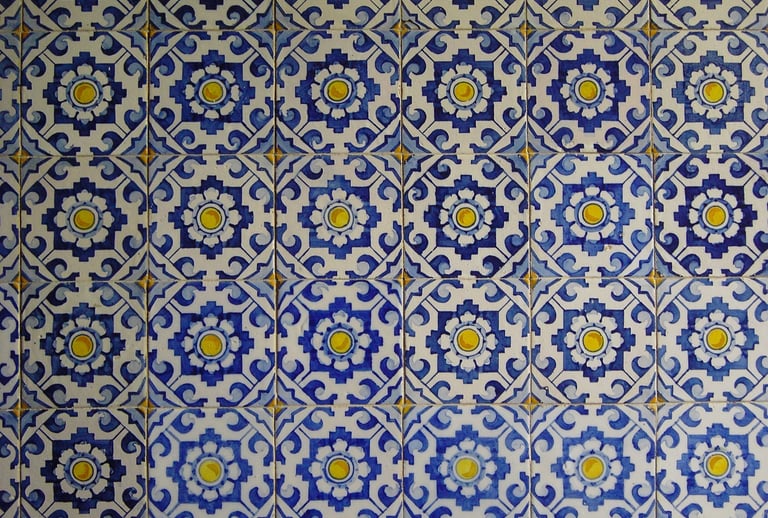
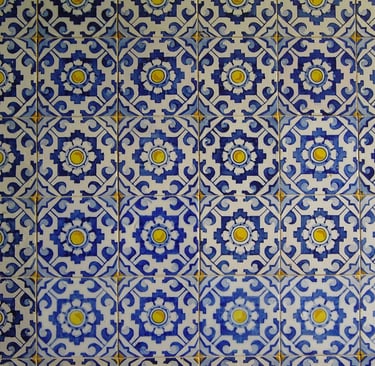
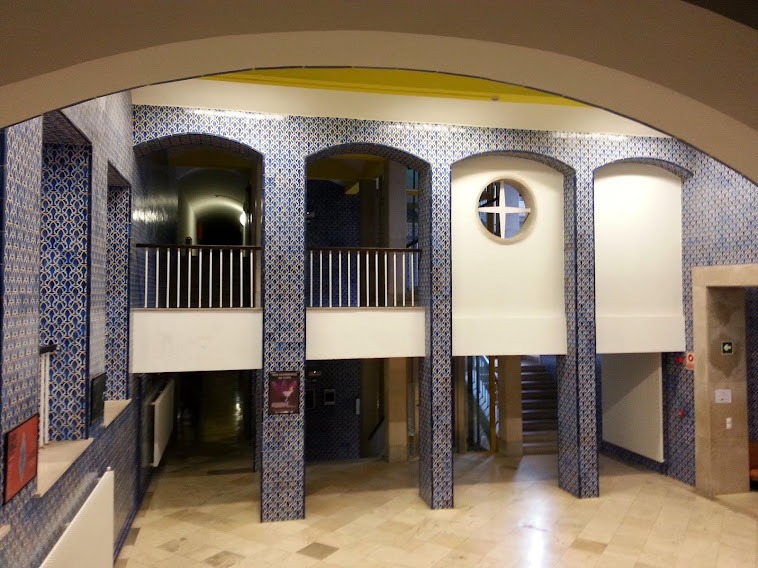
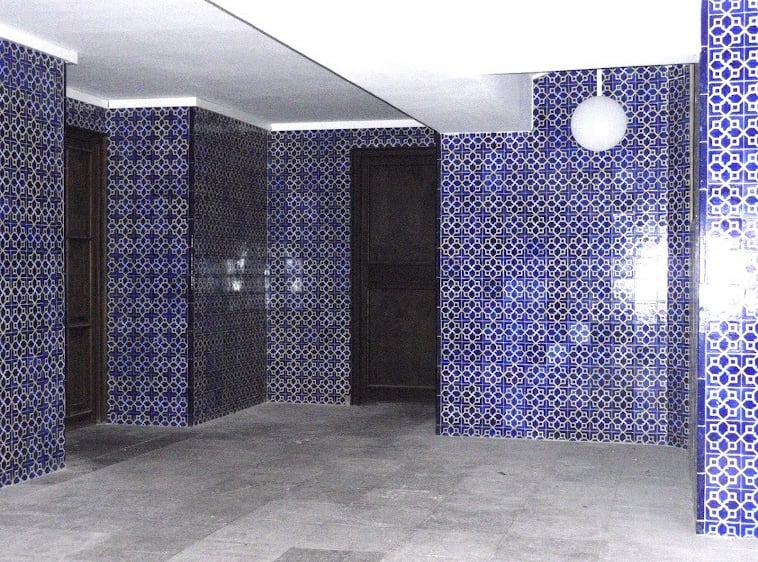
The tiles that clad the galleries, corridors, staircases and various spaces of the Universidad Laboral de Gijón form an ensemble unique in Spain. They were made in Talavera de la Reina, by the prestigious ceramics firm Ruiz de Luna.
The tiles were made one by one using the technique known as "trepa" (stencilling), which consists of applying the colours through stencils of waxed paper cut out for each colour to be applied, and then firing them in order to vitrify the previously applied paint.
The initial quantity of 3,435 square metres is equivalent to some 175,300 tiles, in 9 models with different motifs, measuring 14 x 14 cm, together with sufficient edge pieces.
The nine tile models and their applications
Starfish rays of Flemish inspiration ("ferroneries"); antimony yellow shading to white
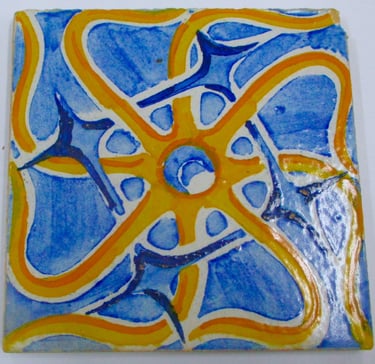
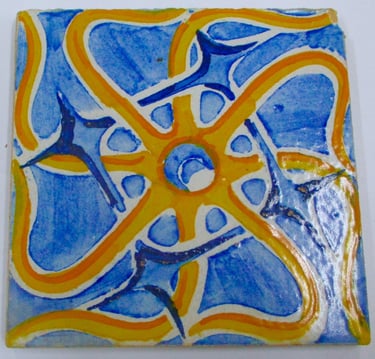
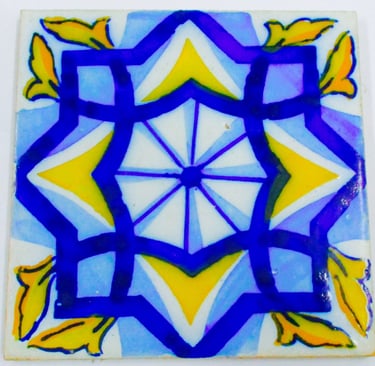
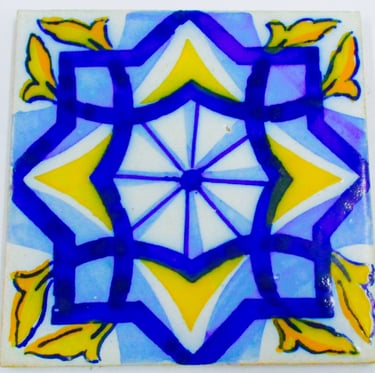
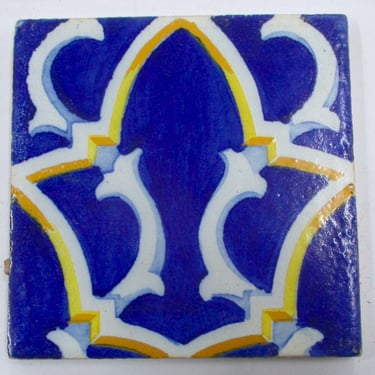
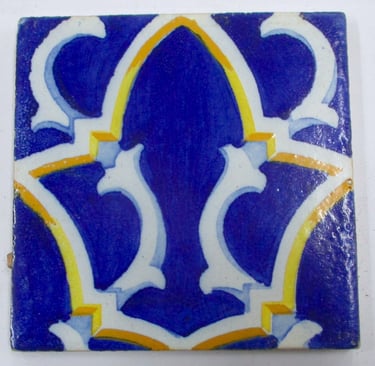
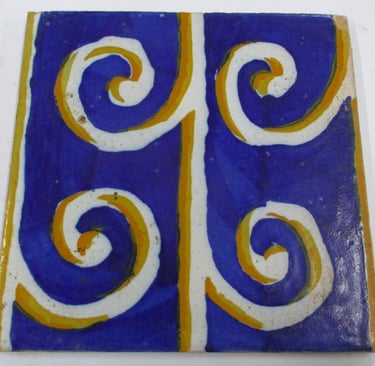
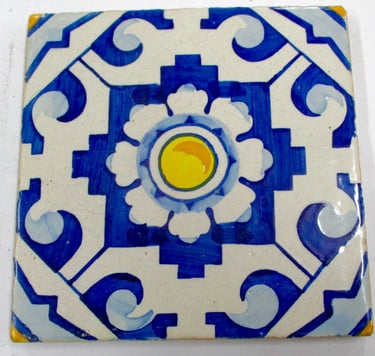
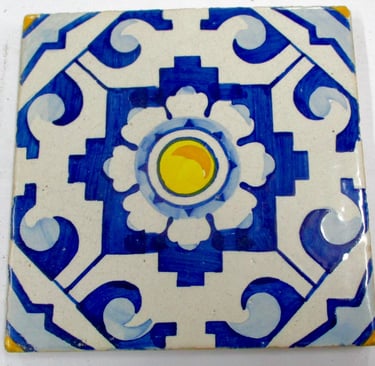
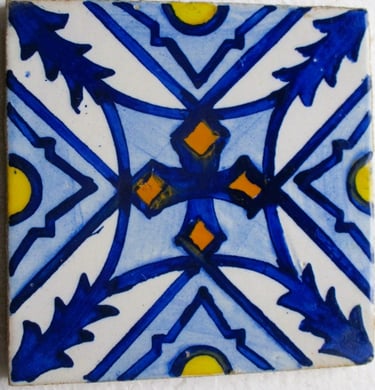
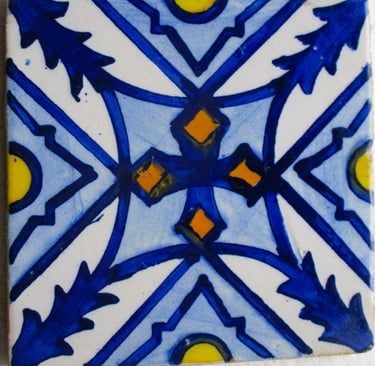
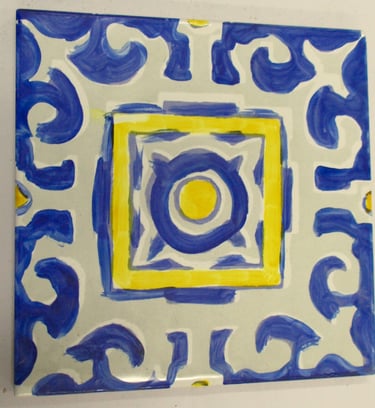
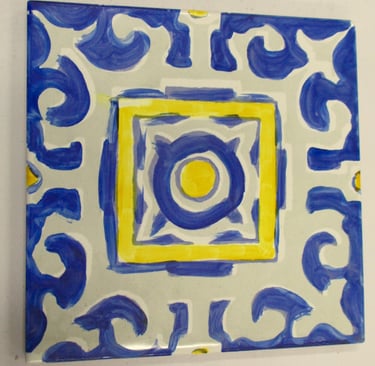
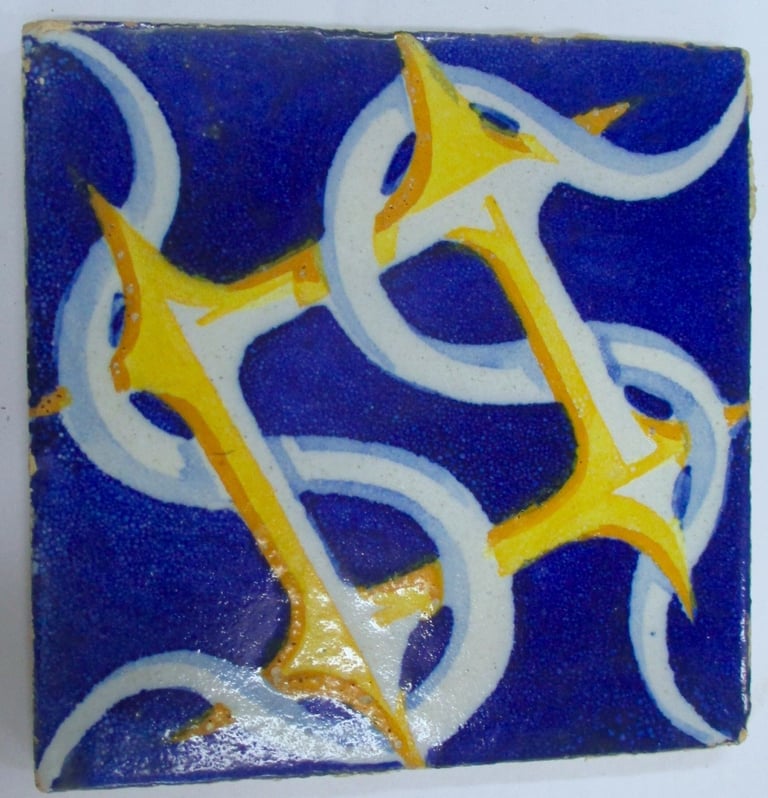
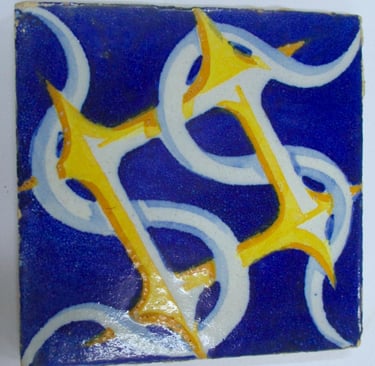
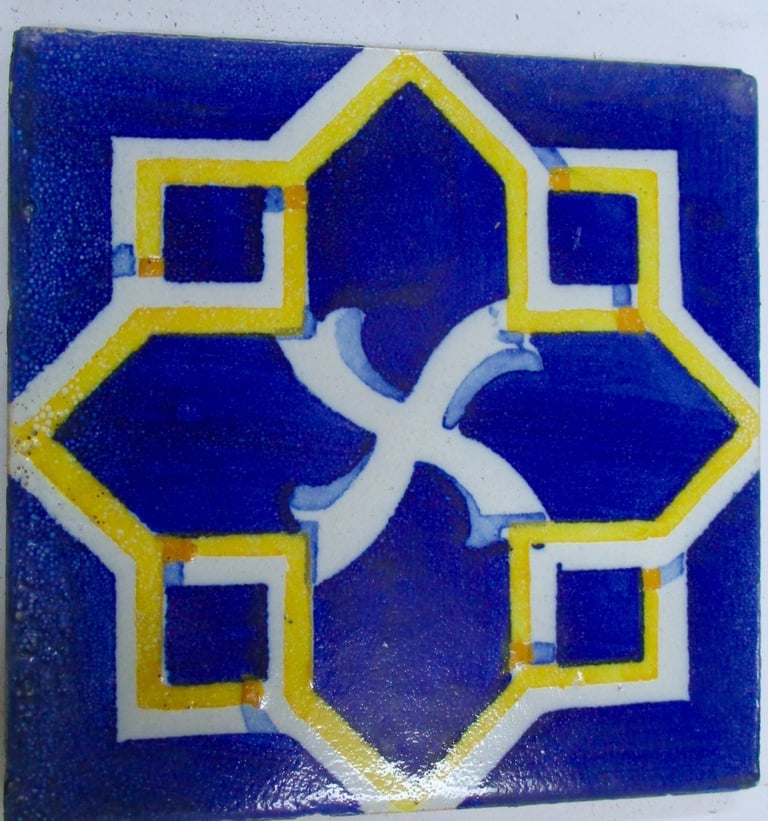
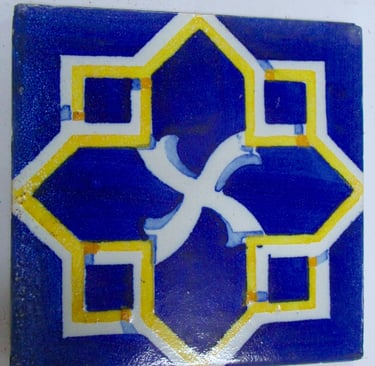
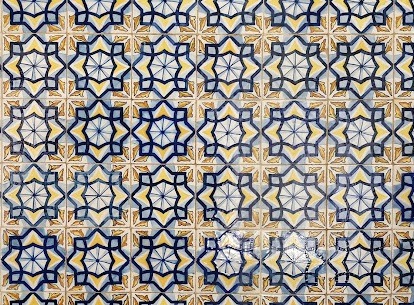
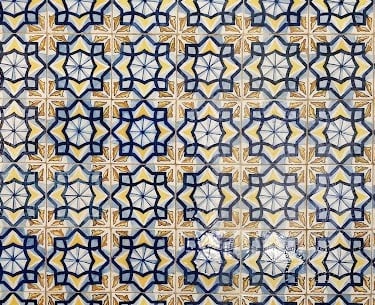
Central radiating rosette, octagonal grid with four pairs of corner leaves
Nasrid, in antimony yellow and deep cobalt, with forms on a pentagonal base and shapes in white
Model with a plant motif of Mudéjar inspiration, with forms in antimony yellow shading to white
Central octagonal medallion in cobalt blue with a central pearl on an antimony base and shadows shading to white
Plant motif on a central Saint Andrew's cross, Alcora type, antimony yellow in large dots
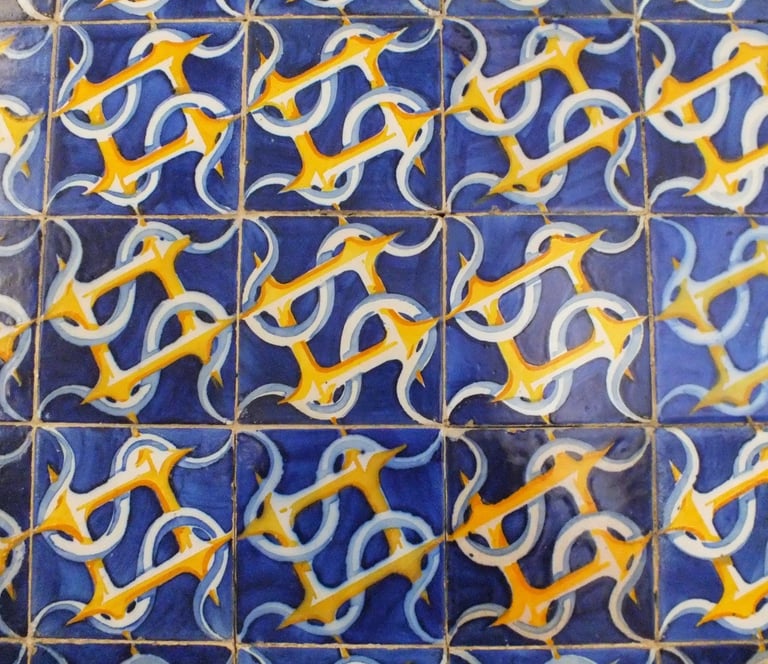
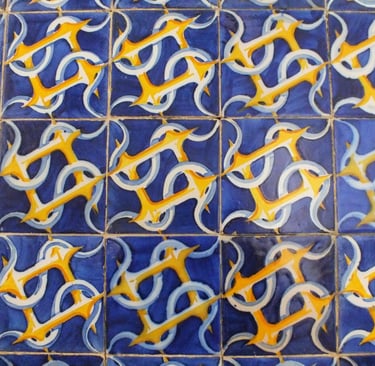
Flemish square and interlaced S in white, with graded shadows; antimony yellow shading to white
Flemish "ferroneries", zinc sulphate base, square in antimony yellow
Classical Andalusi, deep cobalt, cruciform antimony yellow, graded blue shadows
Applications of the various tile models
Rafael Morán Rumoroso
info@universidad-laboral-gijon.es

