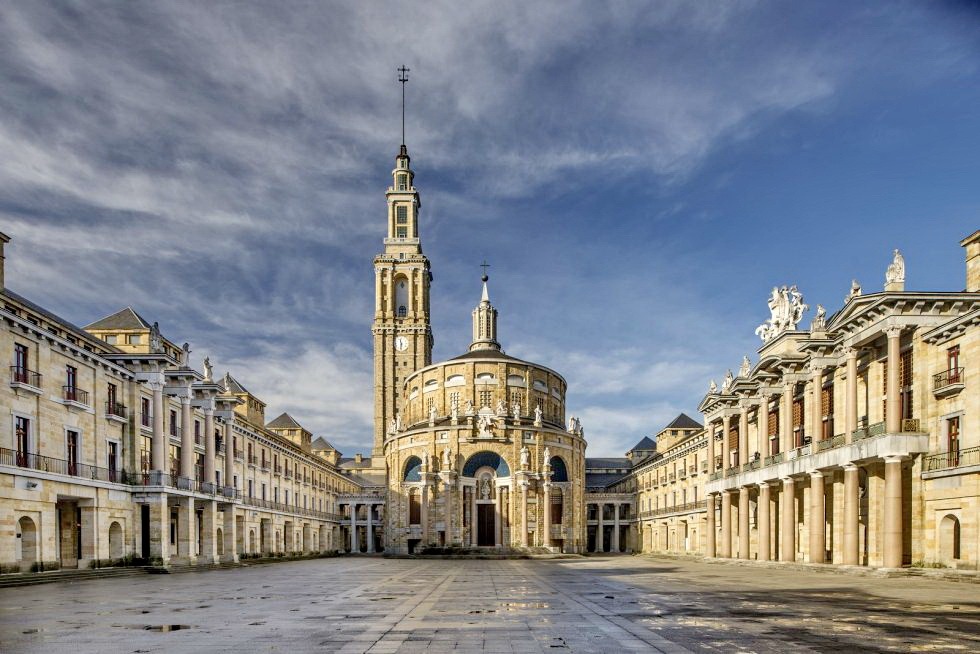
THE SCULPTURAL ENSEMBLE OF 42 STATUES AND COATS OF ARMS, PROBABLY THE LARGEST CONCENTRATION OF STATUARY IN ANY PUBLIC INSTITUTION, WAS EXECUTED BY THE SCULPTORS FLORENTINO TRAPERO AND MANUEL ÁLVAREZ LAVIADA
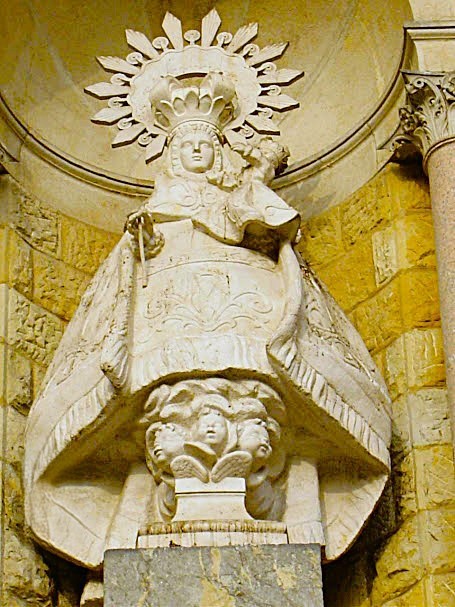
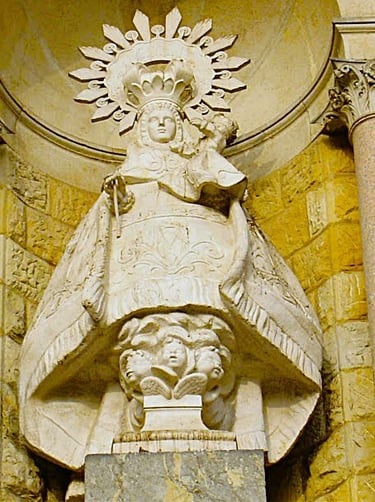
On the exterior of the church stand two statues by Álvarez Laviada symbolising the Virgin of Covadonga and Saint James the Apostle on horseback
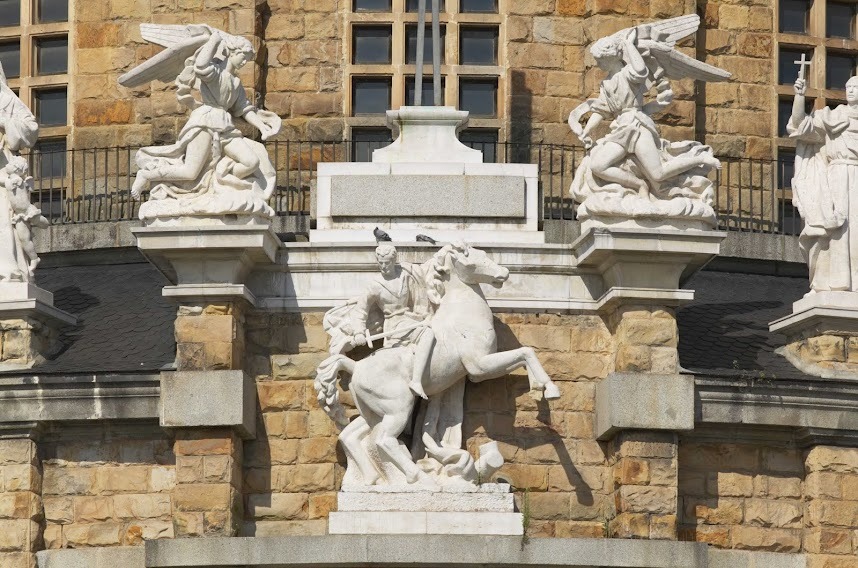
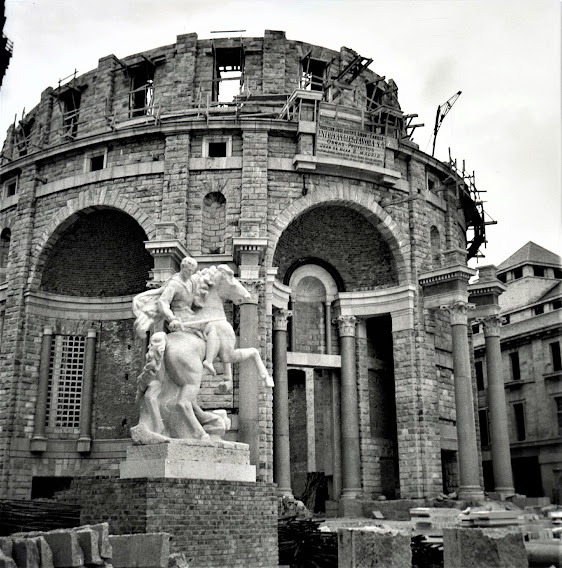
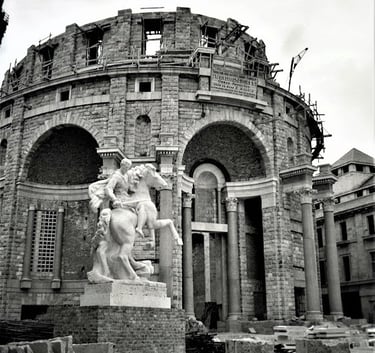
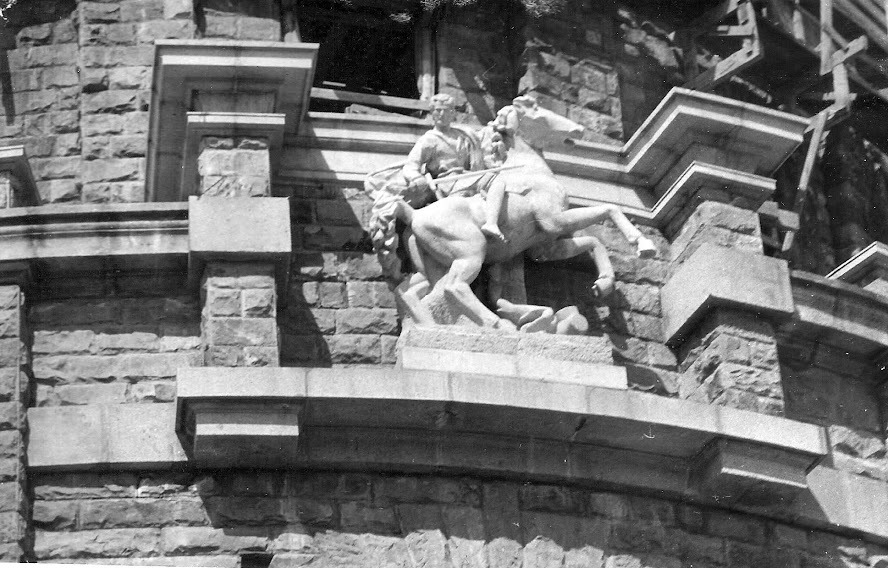
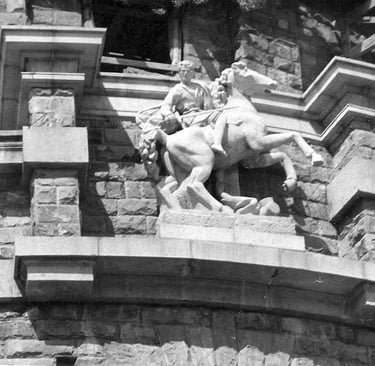
Sculptural group above the church entrance, with Saint James on horseback and two angels adoring a Victory Cross, the symbol of Asturias, at the top
Laviada's sculpture before it was finally raised to its position on the façade of the church, showing its true size of more than 3 x 3 metres; it was to be placed at a height of 17 metres, equivalent to a modern six-storey building
The statue of the Virgin of Covadonga presiding over the main entrance of the church
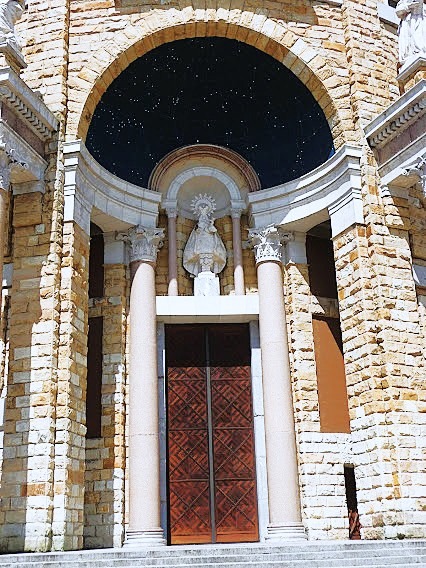
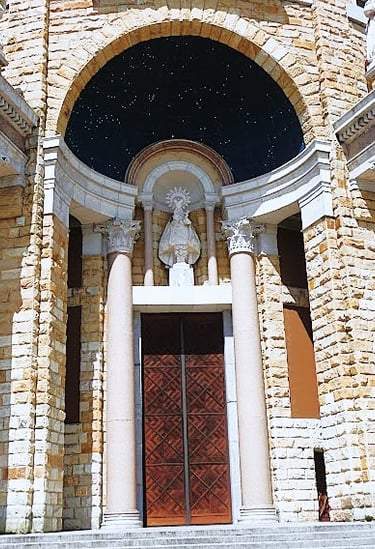
Main entrance with the sculpture of the Virgin of Covadonga, framed by 4 Doric columns, and a main door whose dimensions are similar to those of the Baptistery of Florence
The sculpture of the Virgin of Covadonga
In the central courtyard
There are six statues by the Segovian sculptor Florentino Trapero, dedicated to Cervantes, Moratín, Tirso de Molina, Calderón de la Barca, Lope de Vega and Francisco de Quevedo.
The other coats of arms and sculptures were executed by the sculptor of Asturian origin Manuel Álvarez-Laviada y Alzueta.
Both Trapero and Laviada trained at the Escuela de Bellas Artes de San Fernando
Calderón de la Barca
Miguel de Cervantes
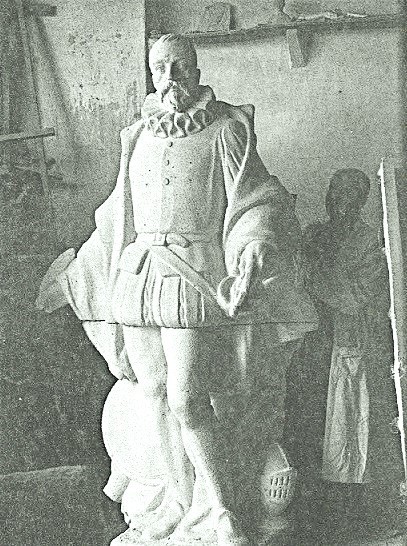

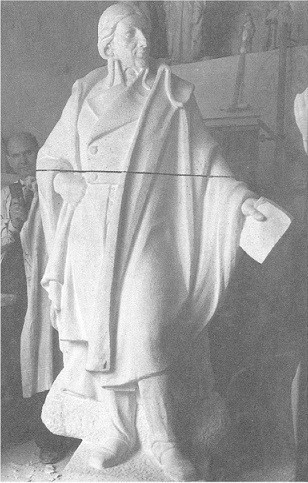
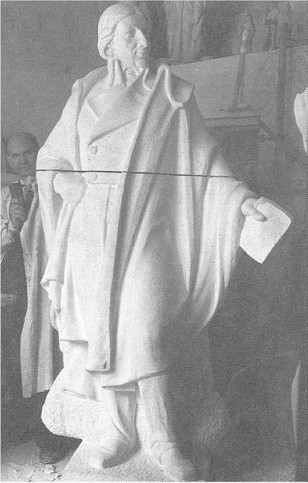


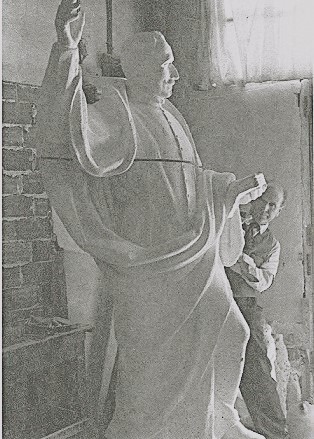
Sculptures by Trapero; the sculptor at work in his studio
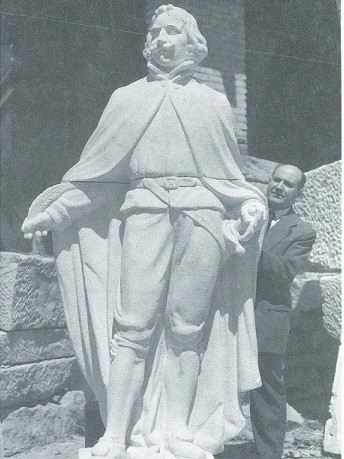
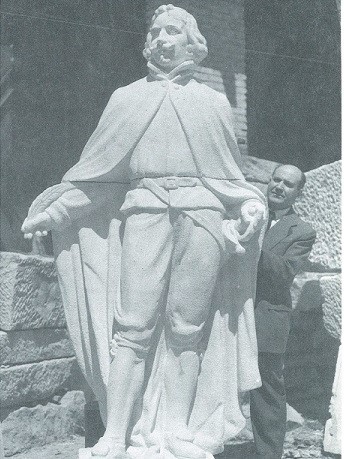
Francisco de Quevedo
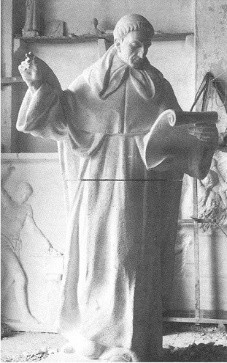
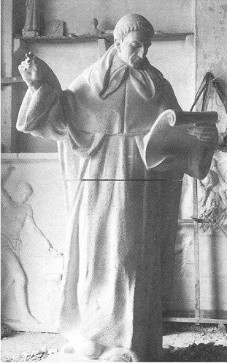
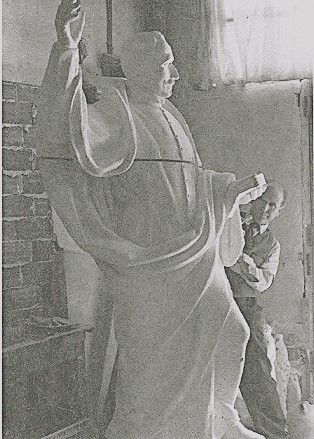
Tirso de Molina
Lope de Vega
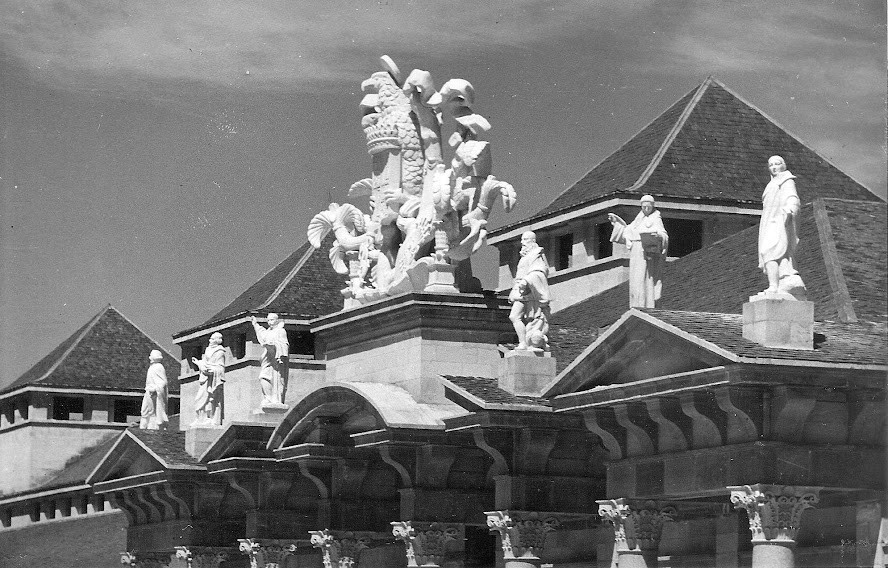
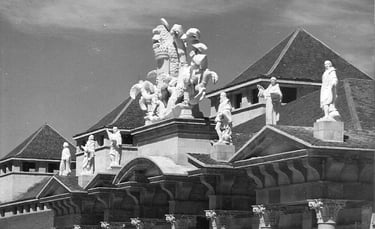
The statues by Florentino Trapero were first placed on the façade of the Aula Magna, but the architect Luis Moya stated that he found them too slender and ordered them to be replaced by the same figures in a seated position, commissioning Manuel Laviada to make them.
The statues were carved, but only at the end of the 1950s was the one of Quevedo changed, the rest remaining uninstalled until December 1986, when 4 of them (Cervantes, Tirso de Molina, Lope de Vega and Calderón de la Barca) were relocated on the columns of the Patronato façade and 2 (Moratín and Quevedo) on the Directorate façade of the central courtyard
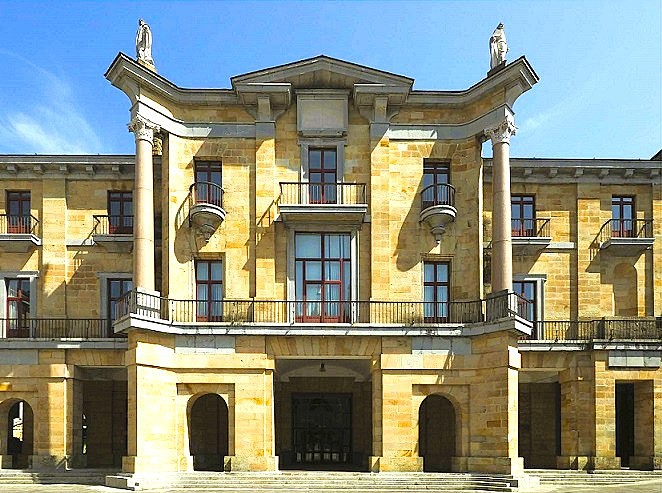
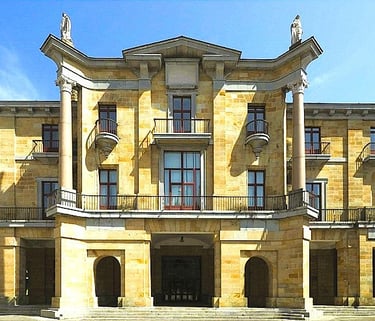
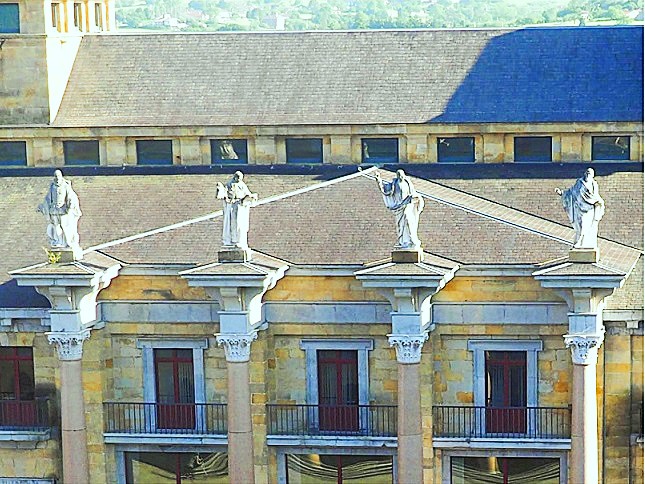

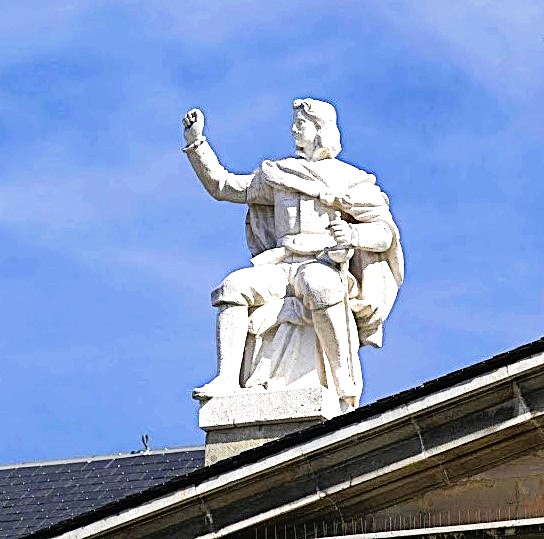
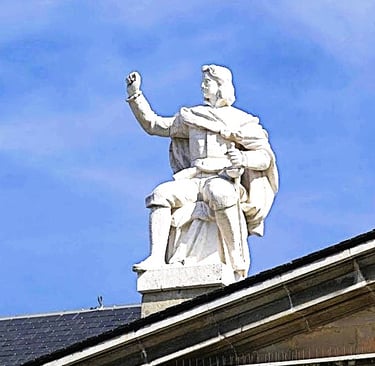


Three of the seated statues made by Laviada to replace those by Trapero
Moratín
Once the replacement of the six sculptures made by Florentino Trapero had been decided, and bearing in mind that more than twenty years passed before the other five pending seated statues were installed, we show below a series of photographs of this event.
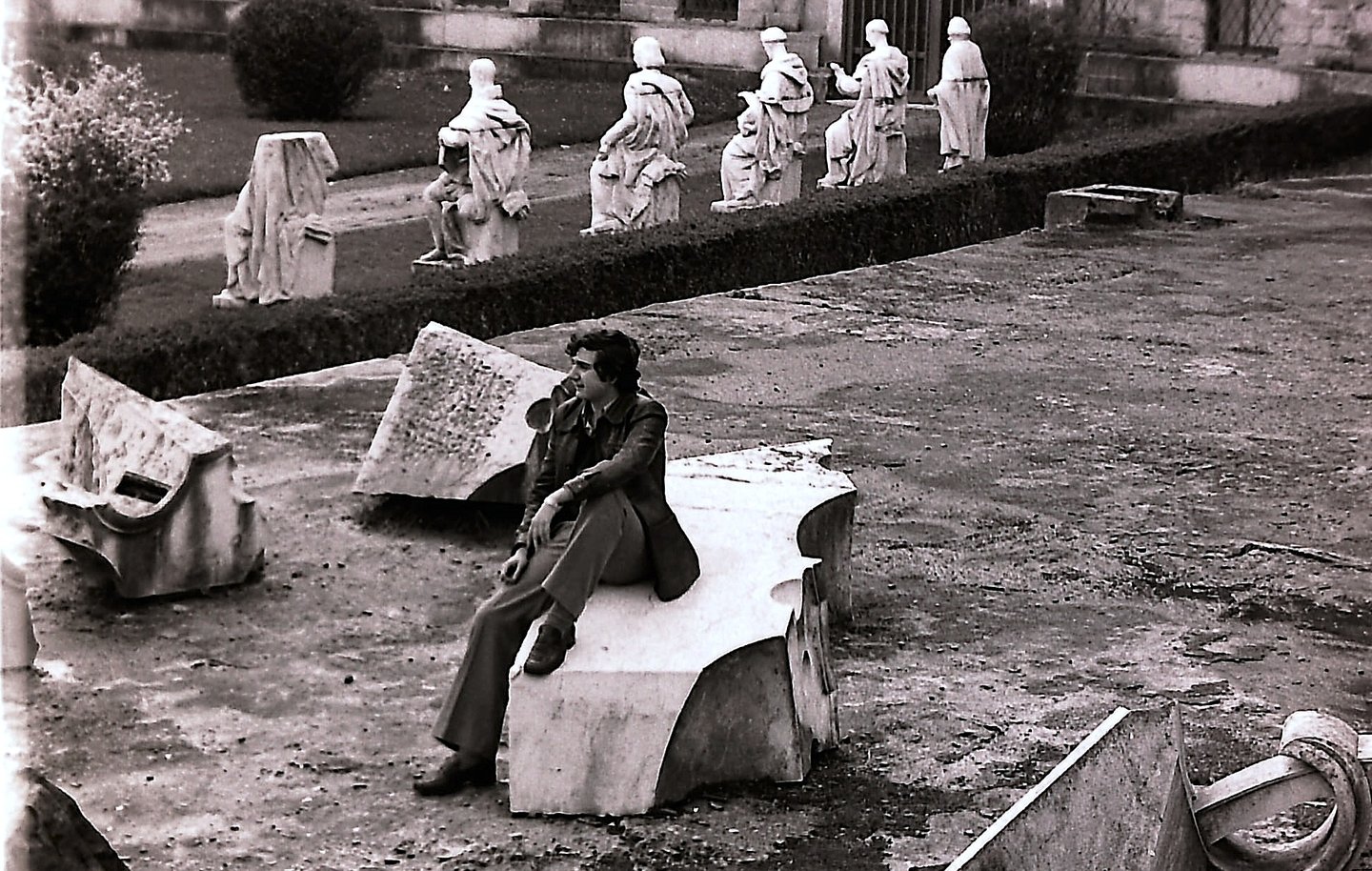
In this first recovered photograph of 1977, with statues in storage, we see that the standing Quevedo has already been replaced, at the end of the 1950s, by the seated version. We can also see the other five made by Laviada, awaiting their installation, which took place in December 1986, as we document photographically.
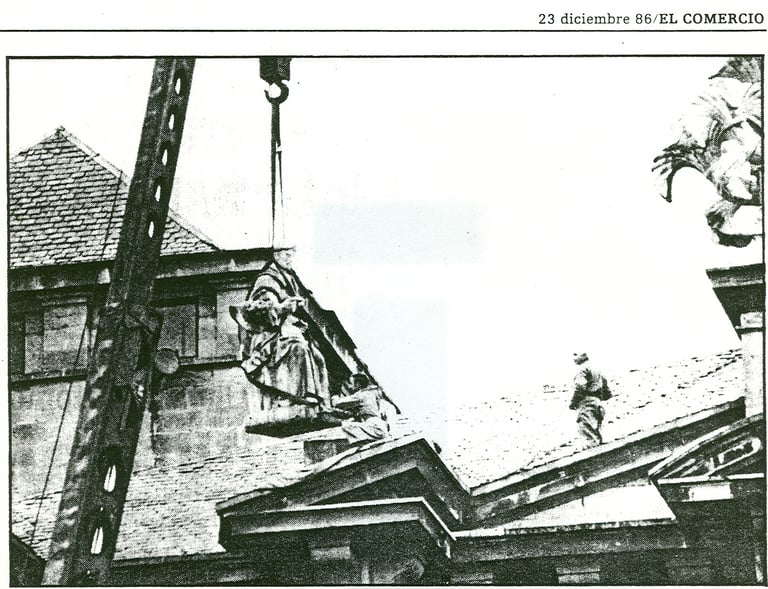
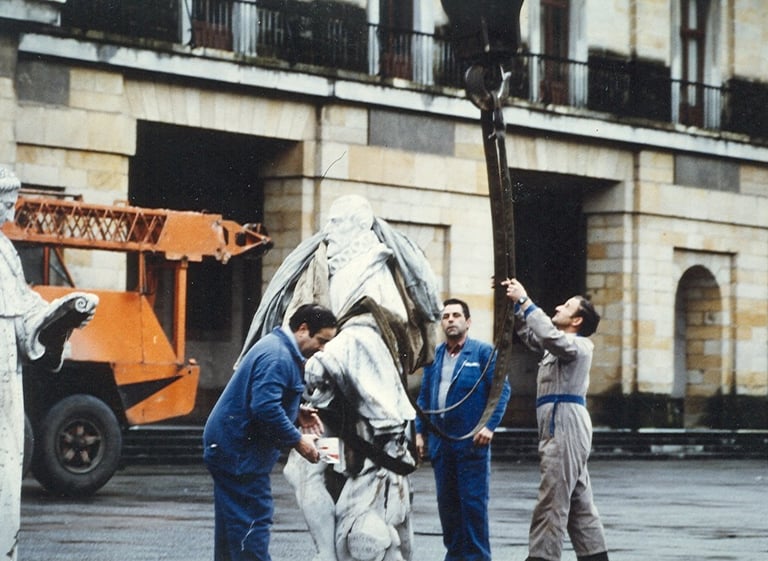
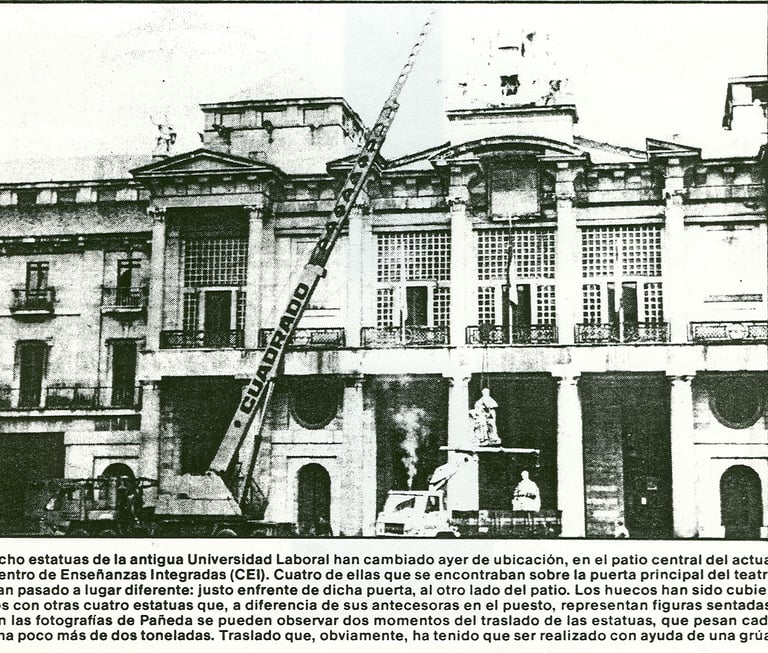
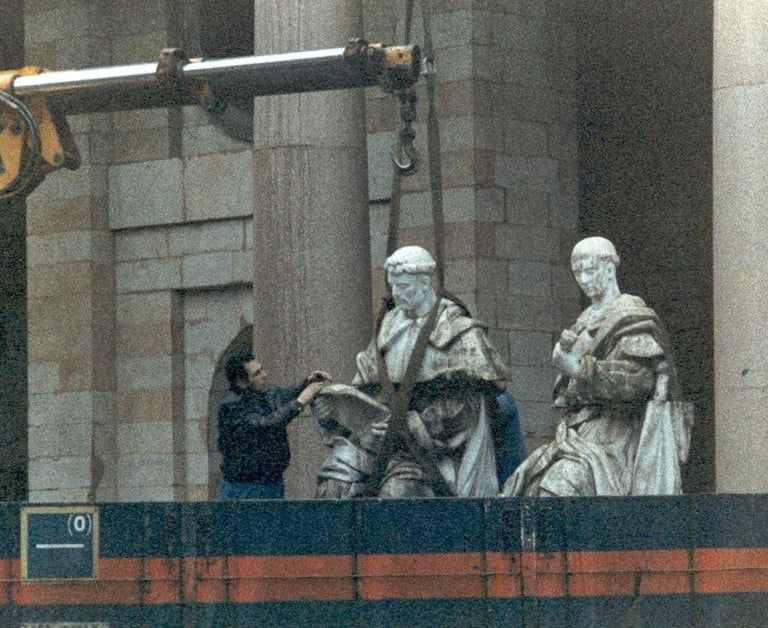
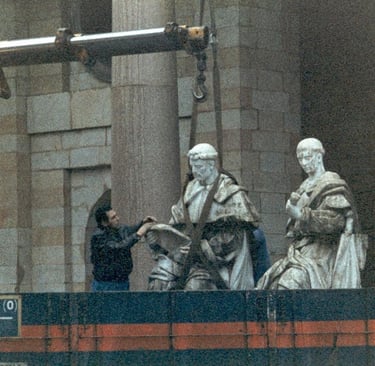
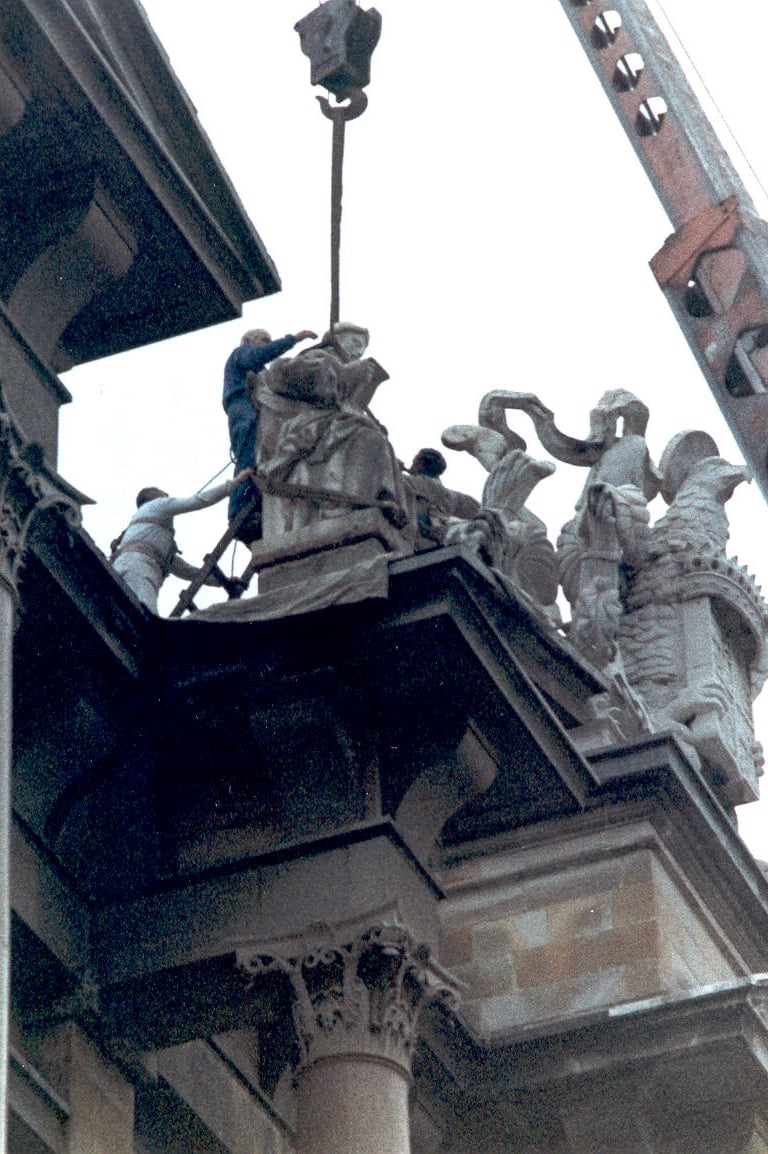
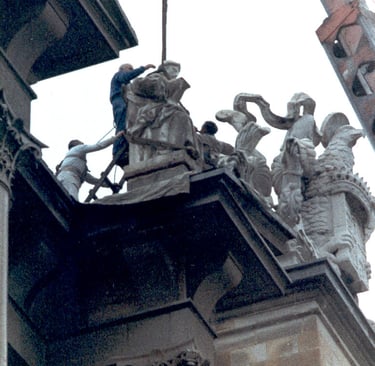
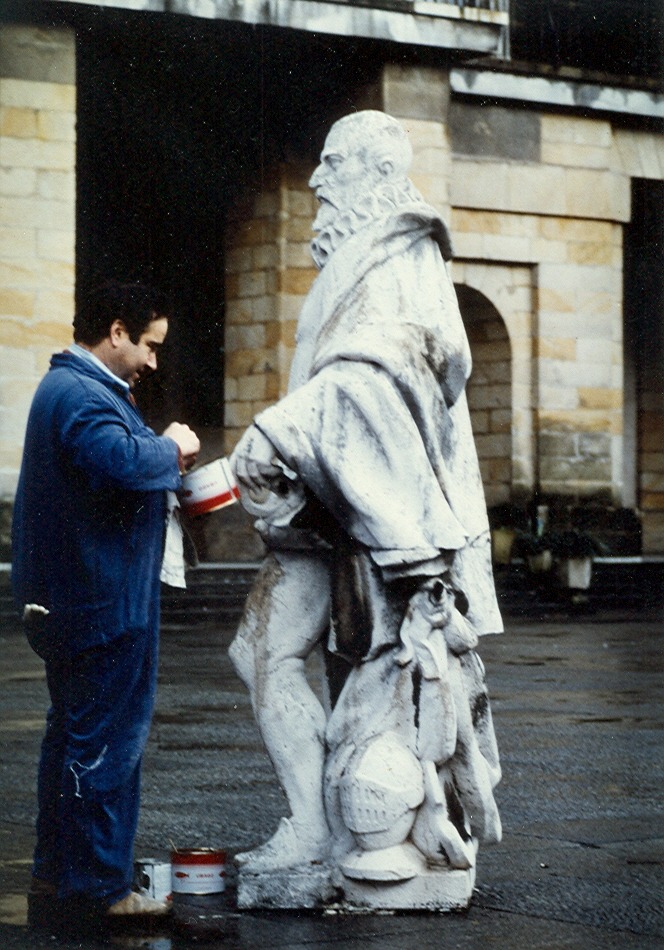
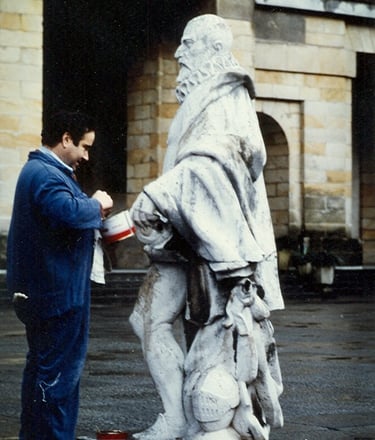
The six statues made by Trapero in their new position on the Patronato and Directorate façades
Photographs taken in 1986 at the time of the definitive relocation of the statues
The sculptures carved by Manuel Álvarez Laviada for the exterior of the church, the central courtyard and the Rocalla courtyard
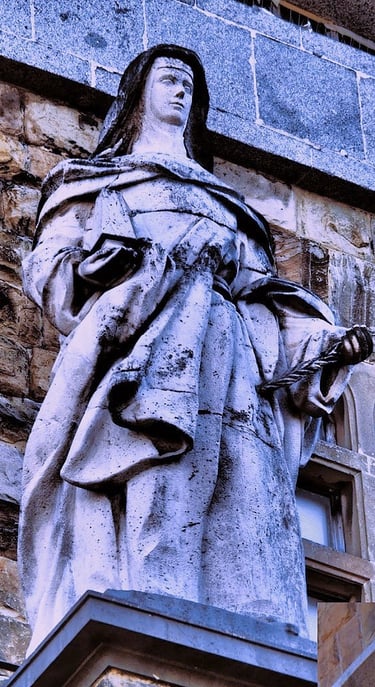
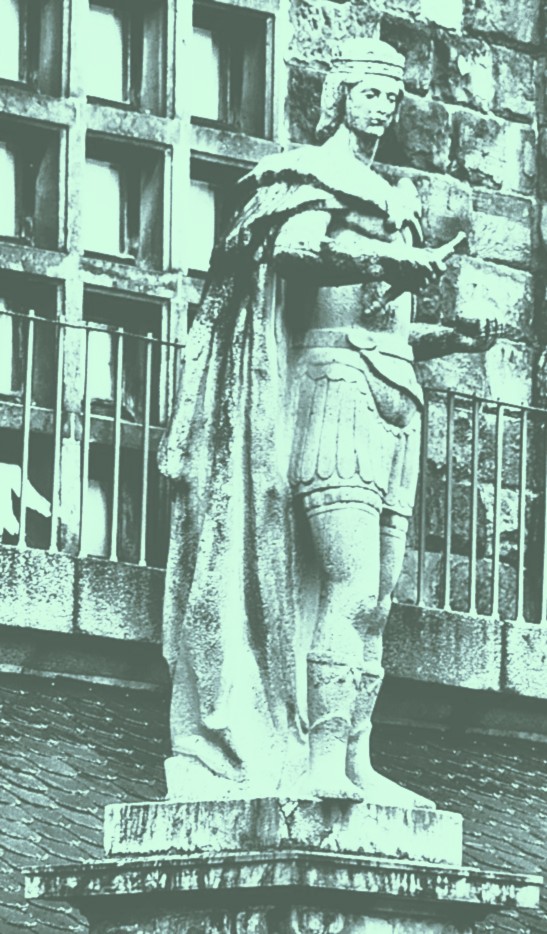
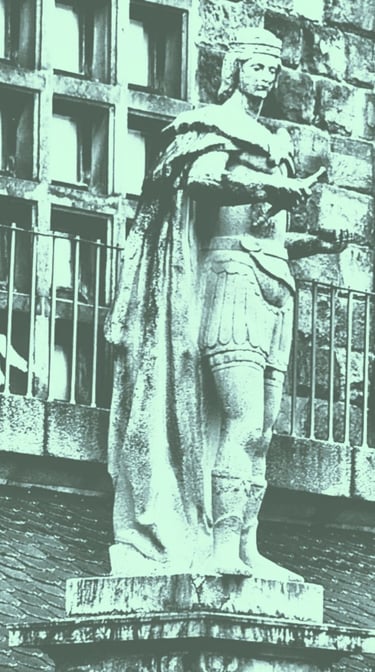
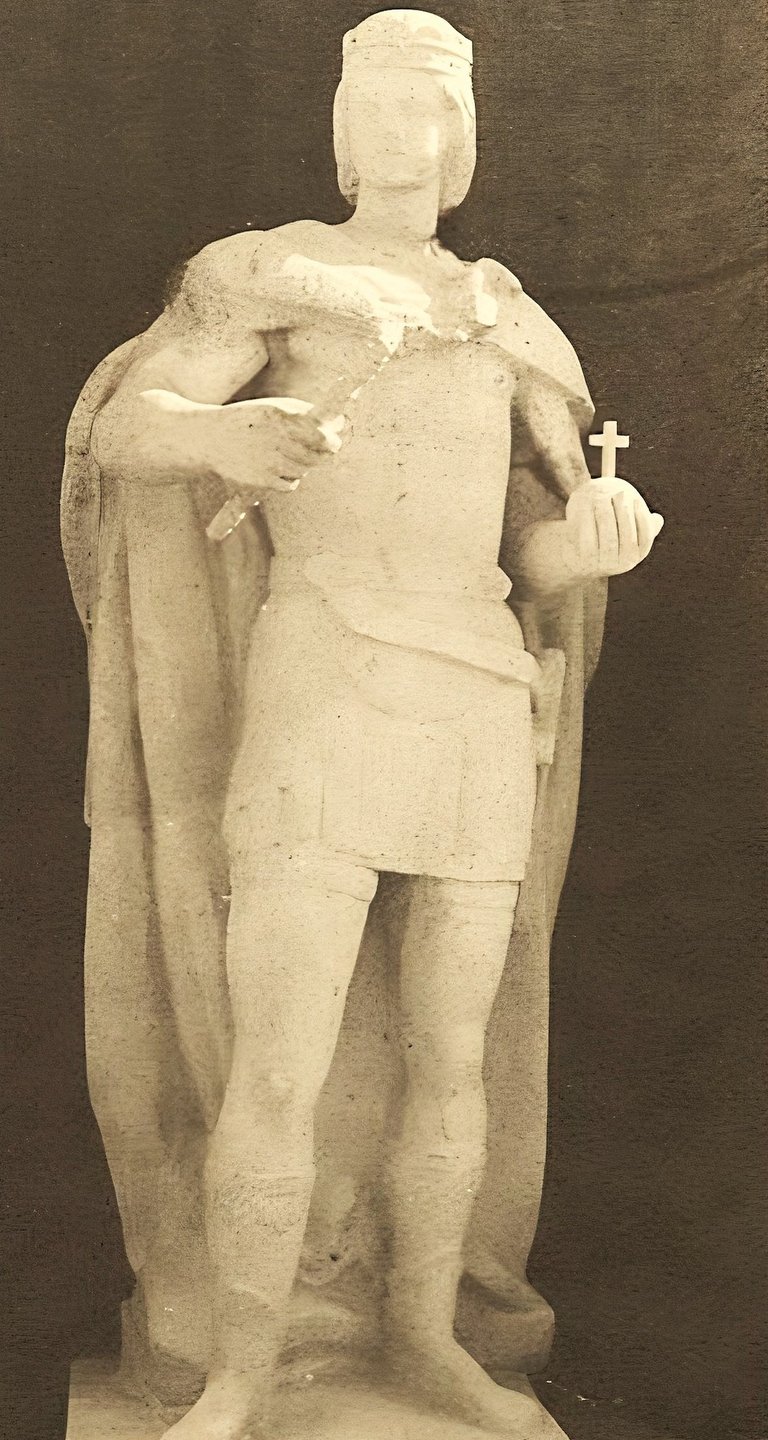
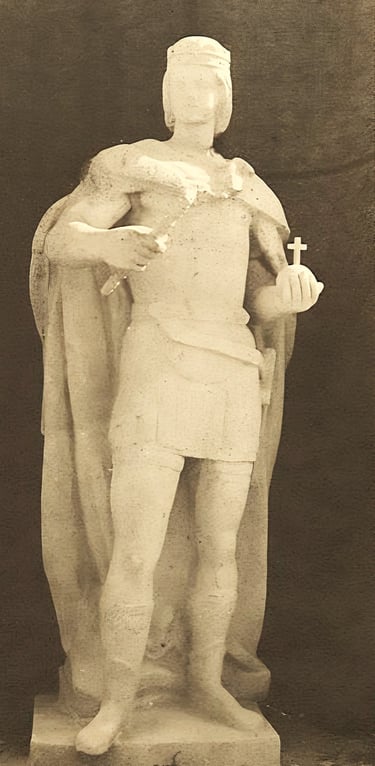
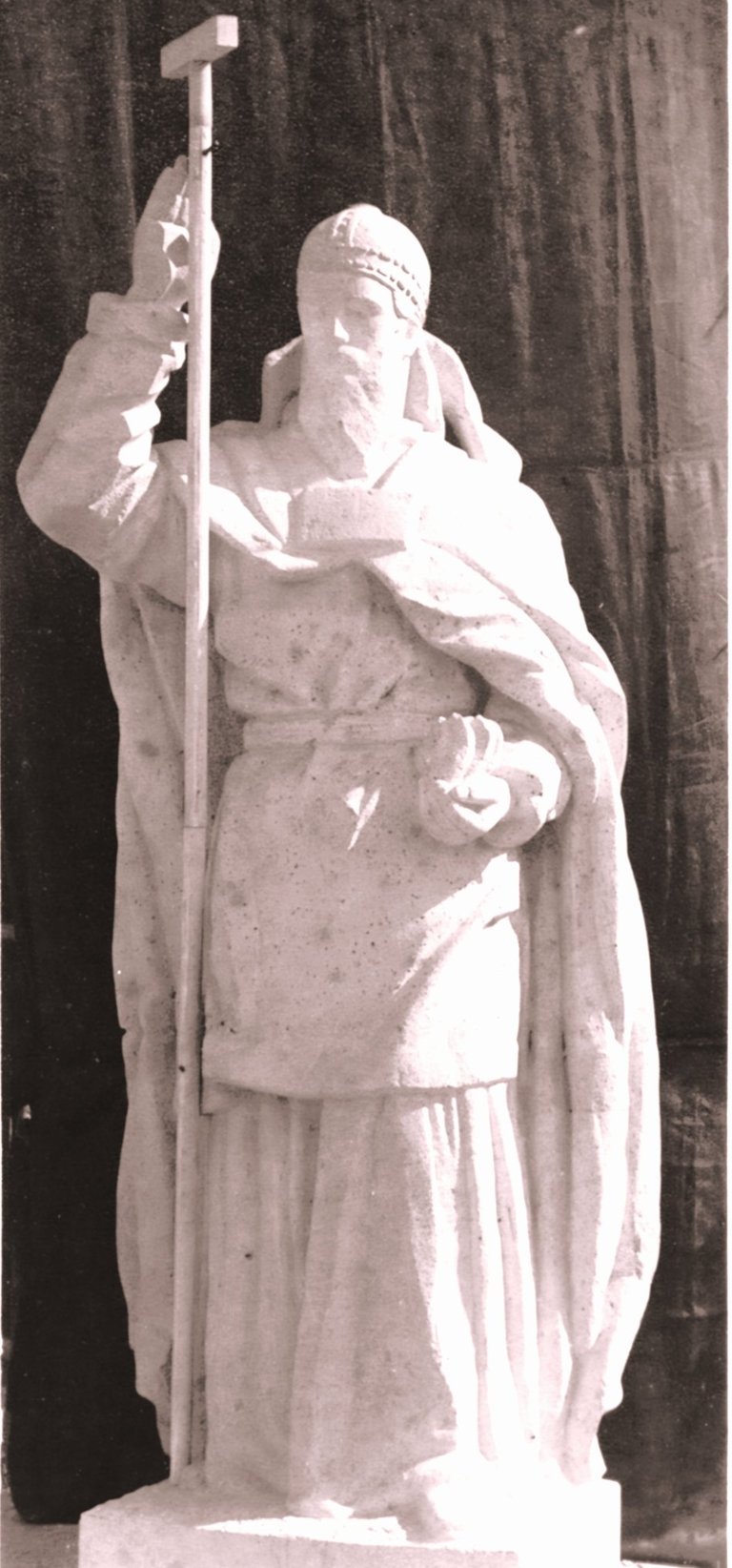
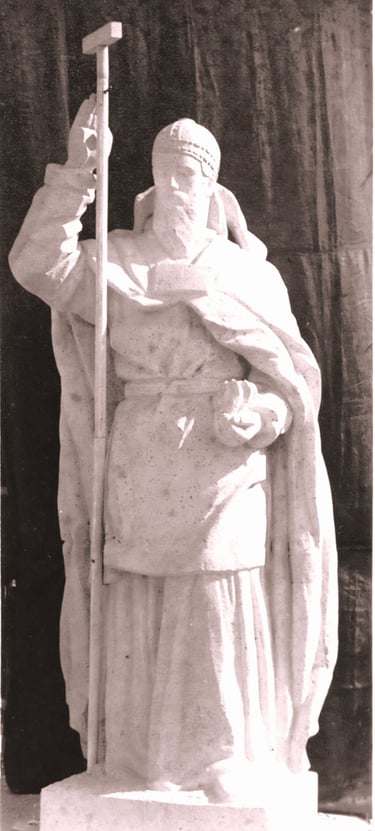
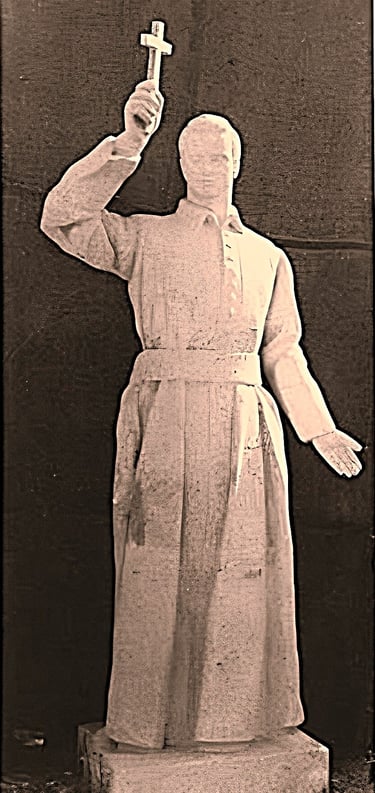
Manuel Álvarez Laviada made a total of 34 statues and 2 coats of arms for the architectural complex of the Universidad Laboral de Gijón, distributed among the church, the Rocalla courtyard and the Aula Magna, together with the coat of arms of the main entrance through the Corinthian courtyard and the principal coat of arms presiding over the central courtyard.
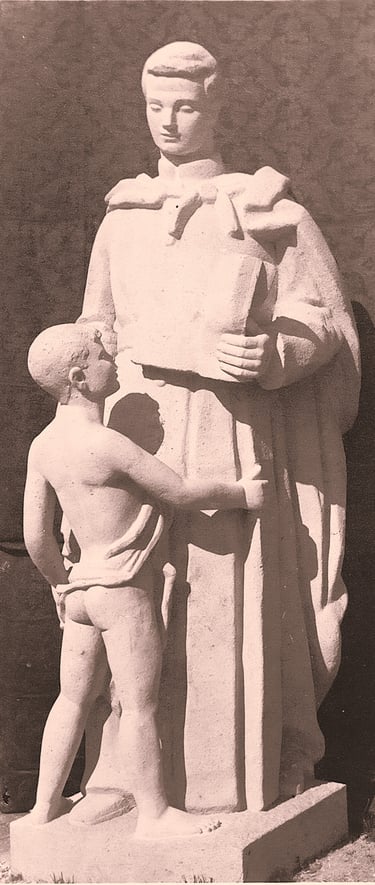
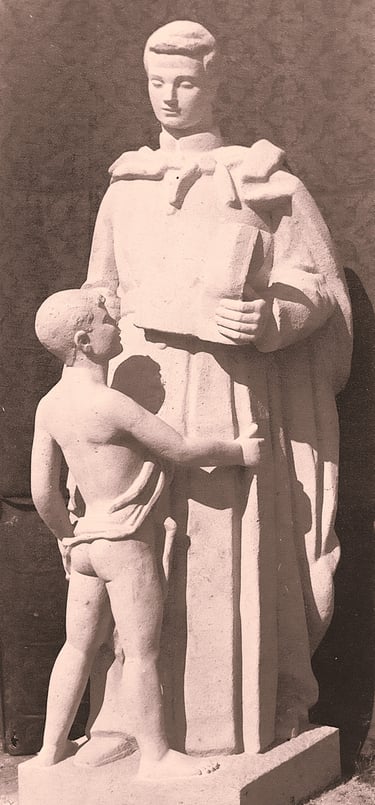
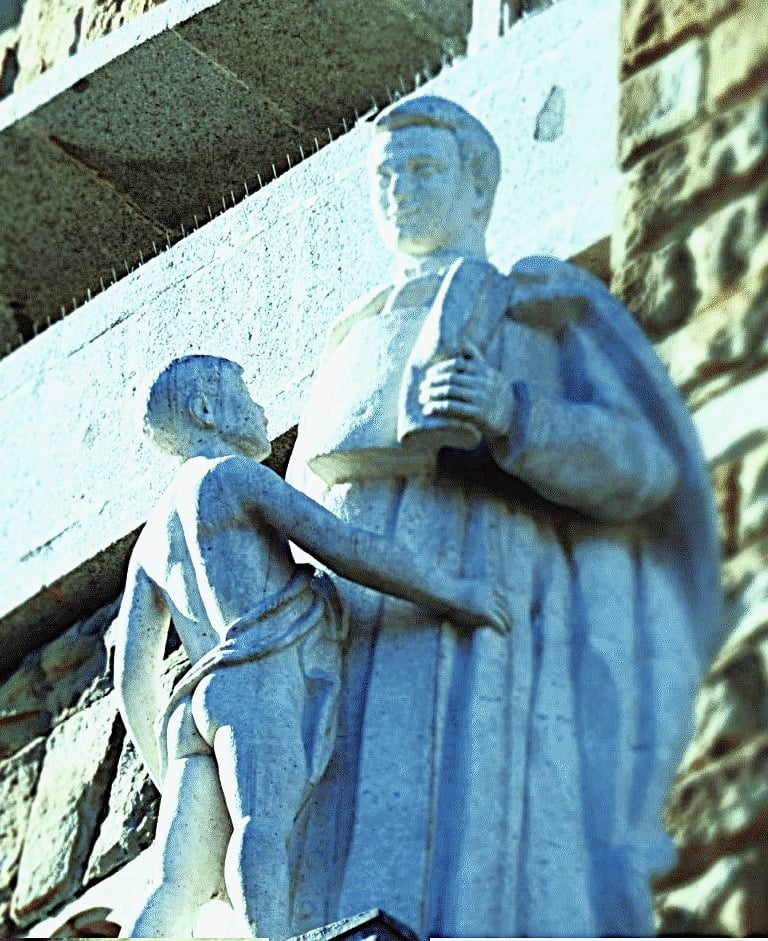
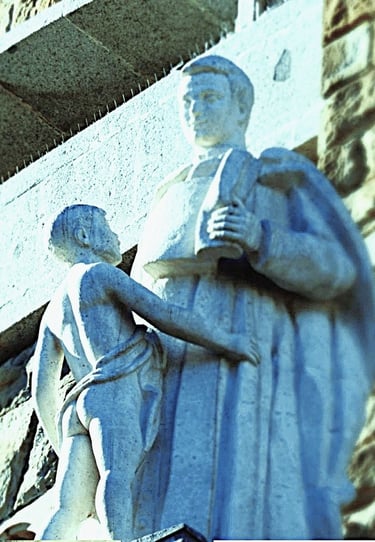
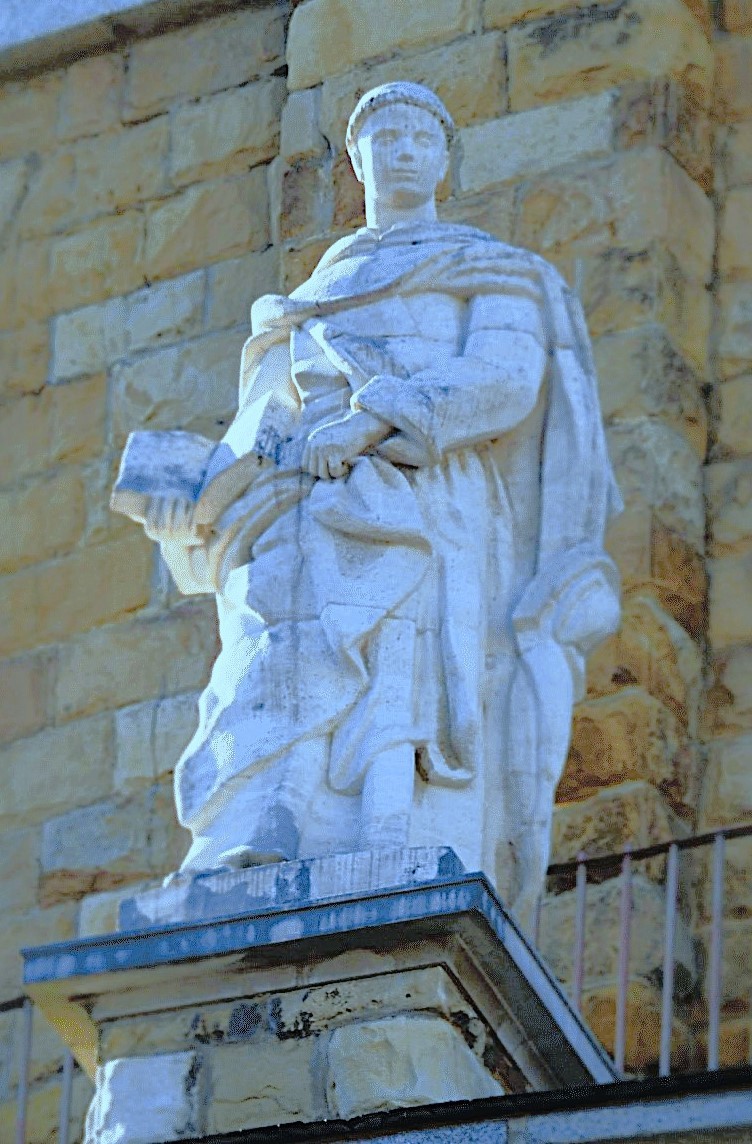
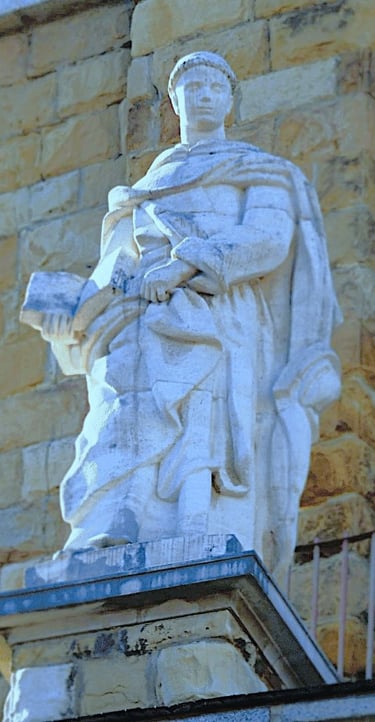
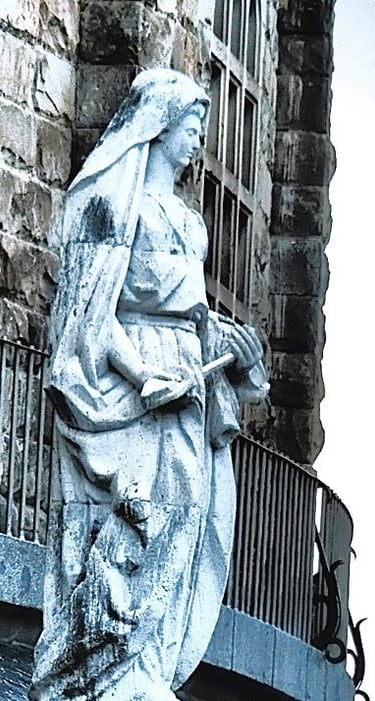
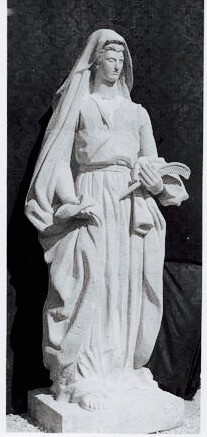
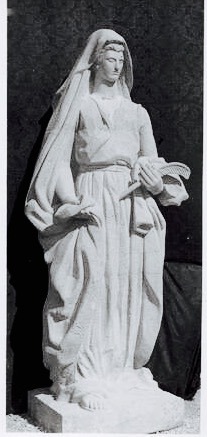
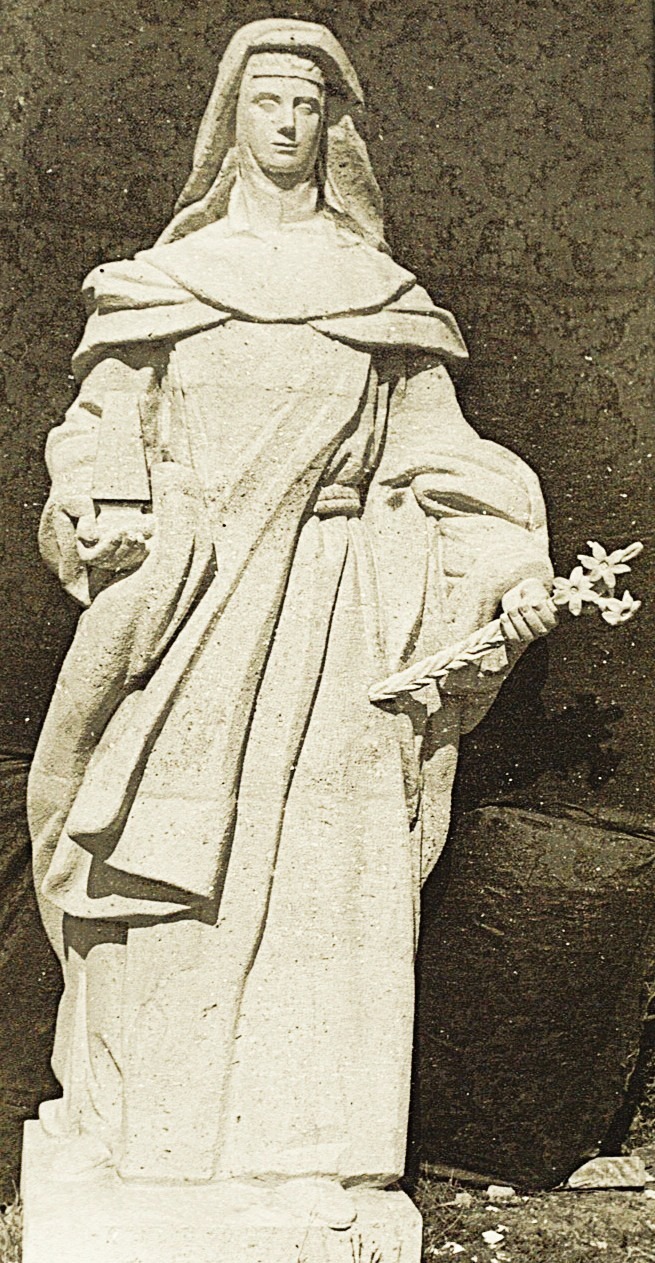
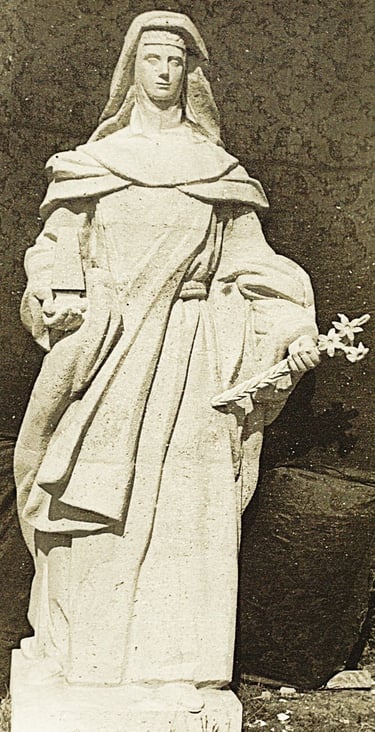
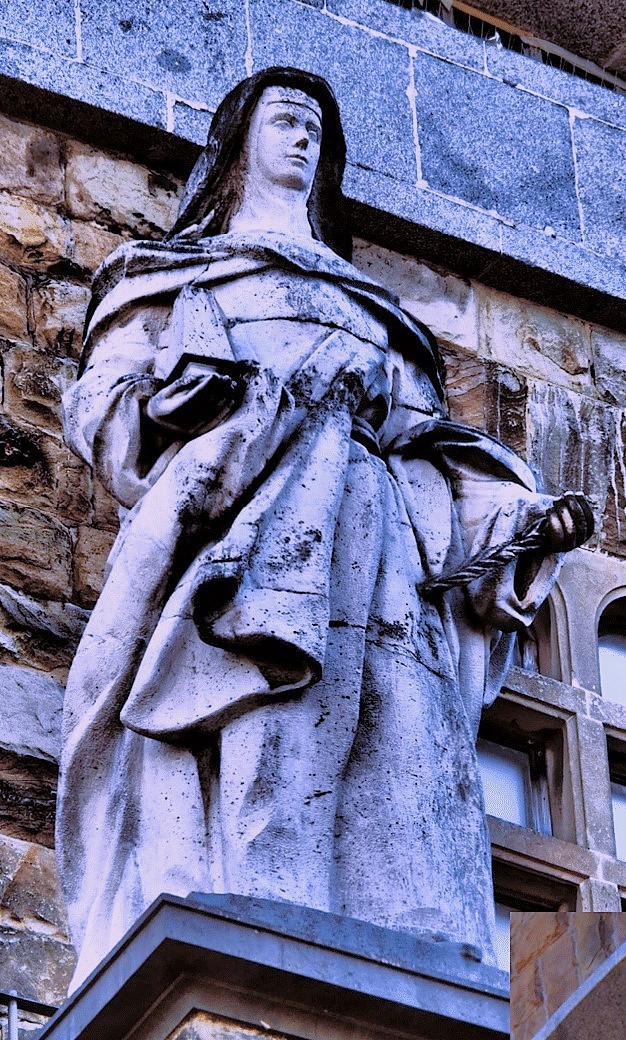
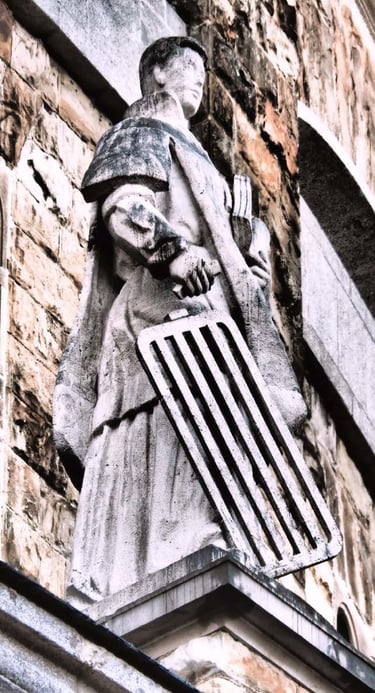
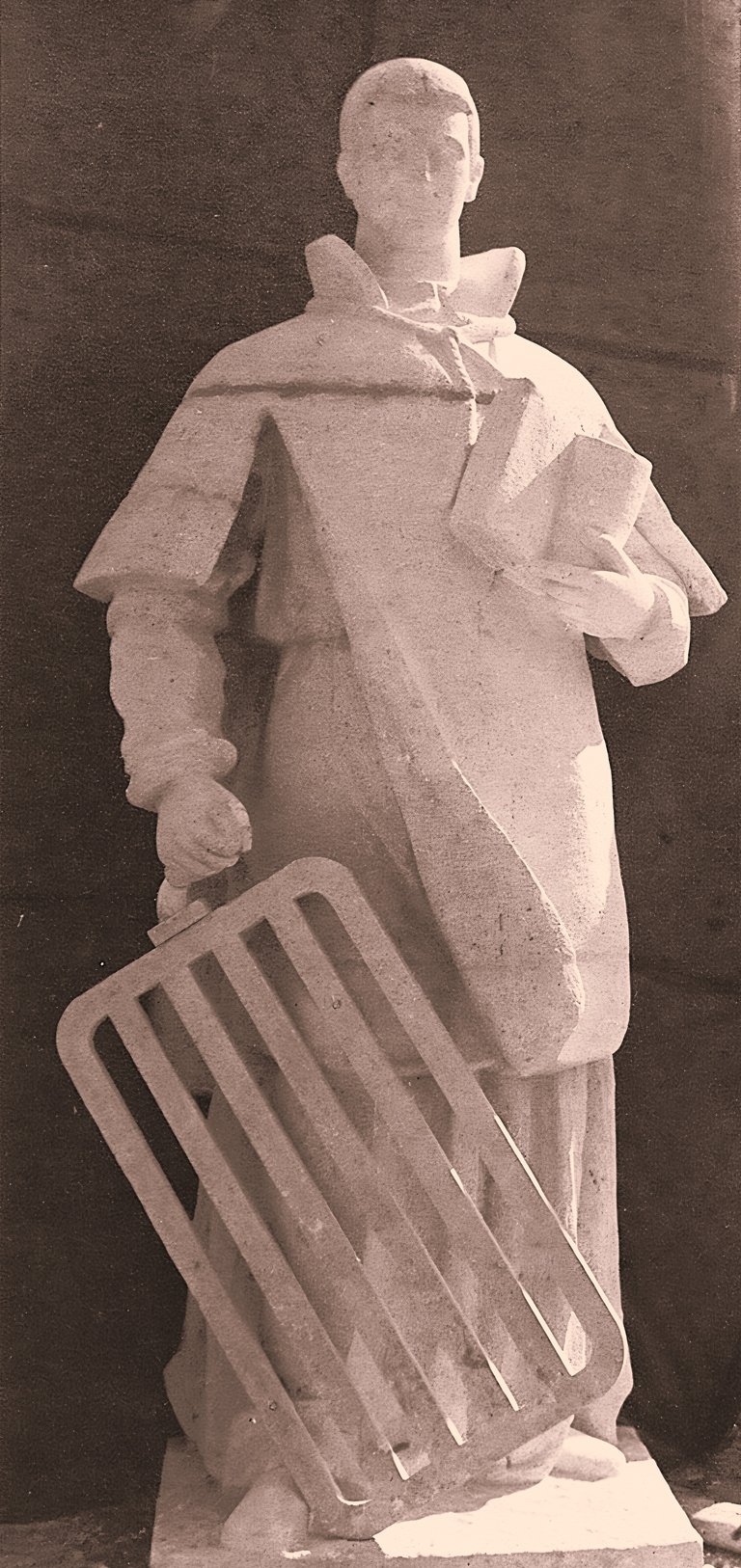
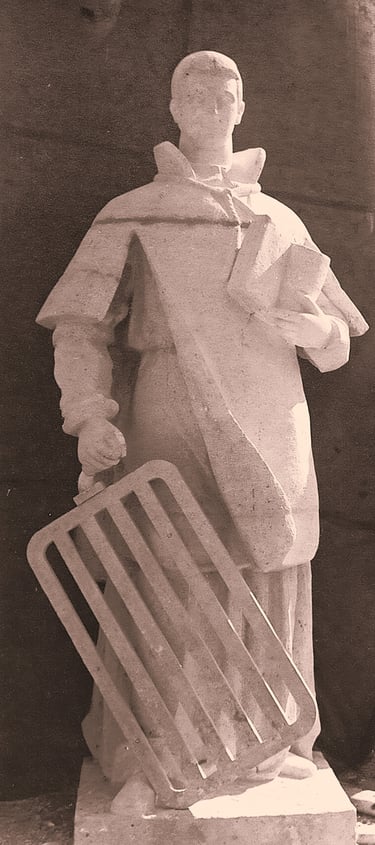
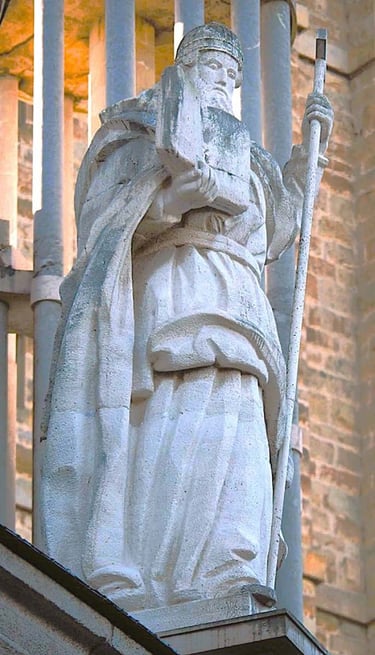
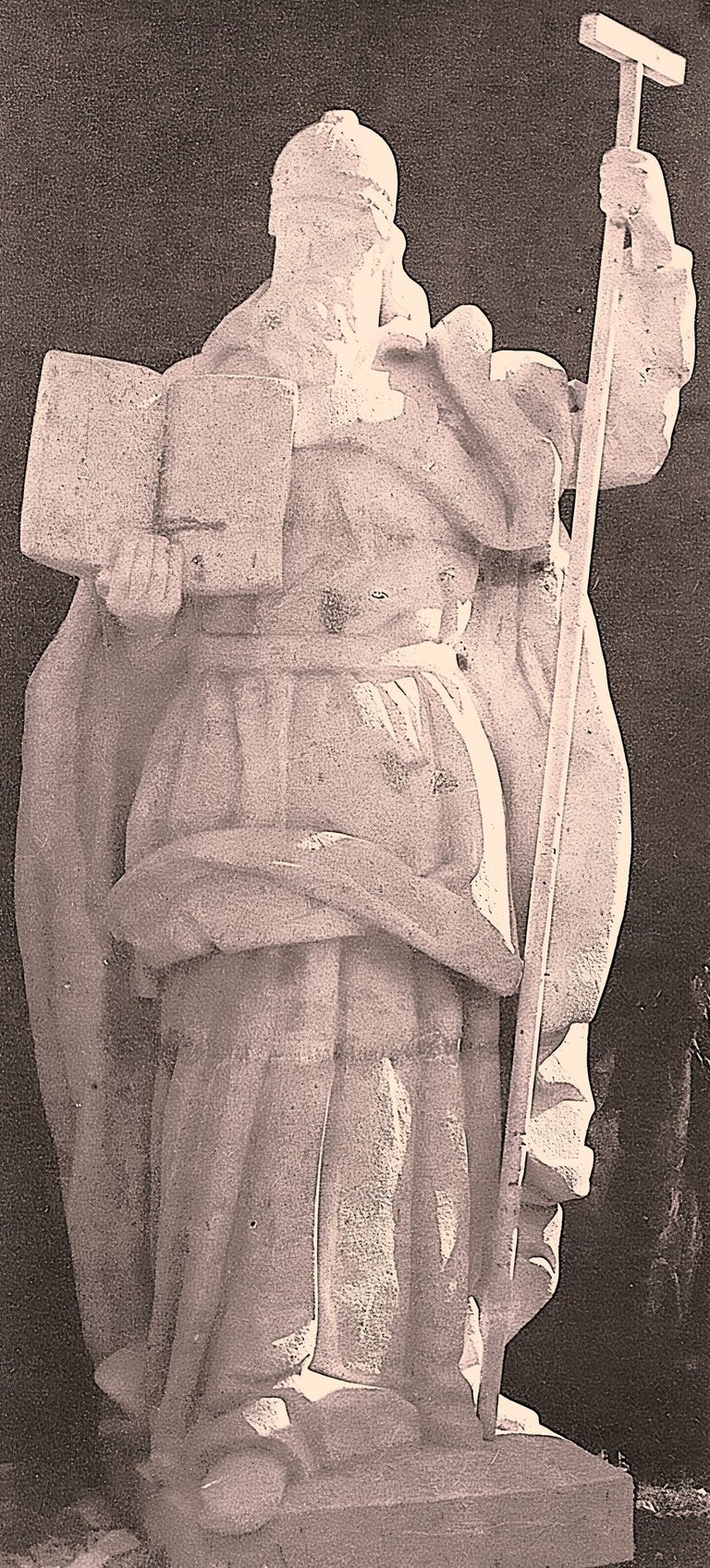
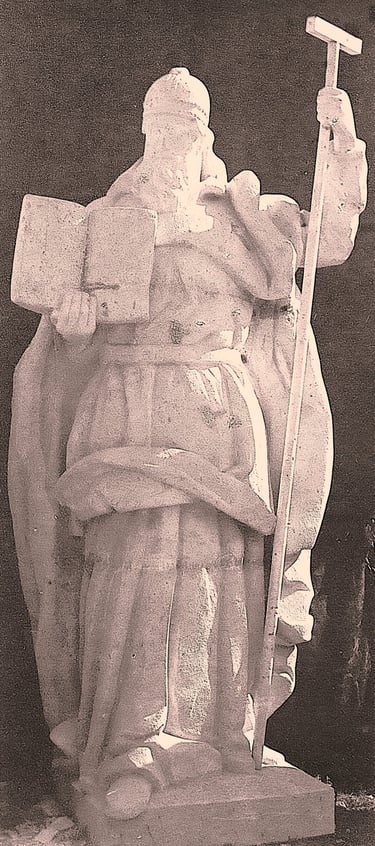
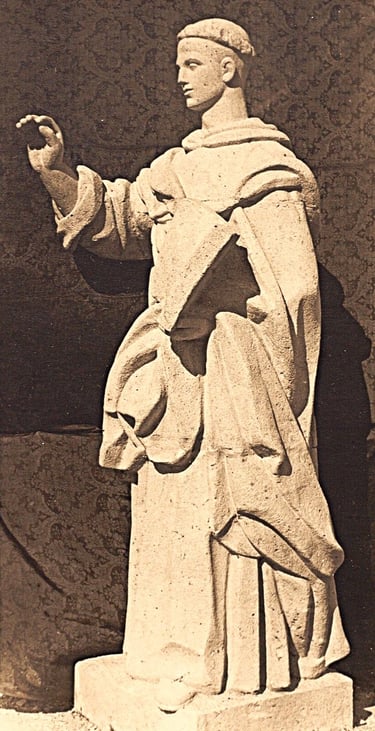
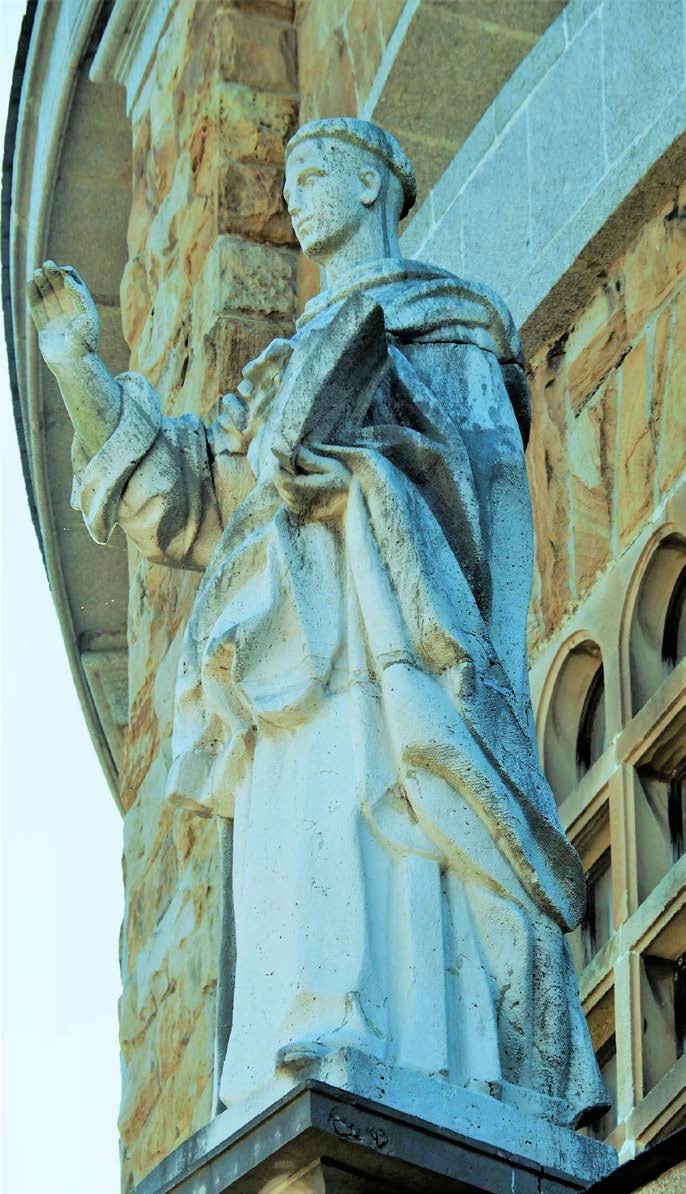
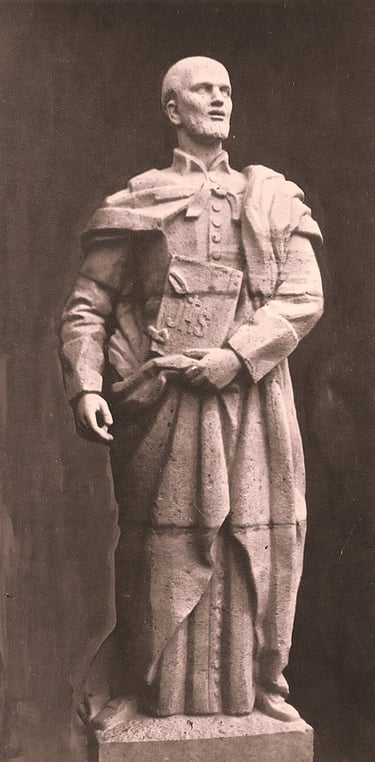
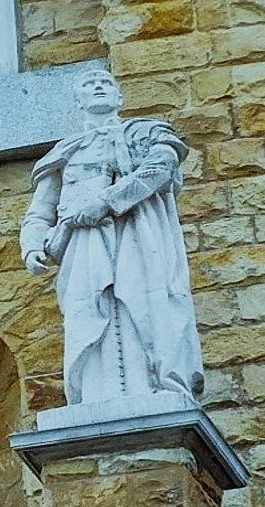
The statues, made of white Colmenar stone and between 2.40 and 2.55 metres high, will be shown in their present state and in photographs taken in Álvarez Laviada's studio in the 1950s, from the Luis Moya documentary collection of the ETSAM in Madrid, in which the most significant details of each piece can be appreciated.
For the purpose of documenting the photographs set out below, we note that the photographs on the left will always be those obtained from the archive of the Luis Moya documentary collection at the ETSAM, and those on the right the same statues in place at the Universidad Laboral.
Their names, in order of appearance from top to bottom, are:
Saint Joseph Calasanz, Saint John of the Cross, Saint Peter, Saint Dominic, Saint Eulalia of Mérida, Saint Clare, Ferdinand III the Saint, Saint Toribio of Liébana, Bishop of Astorga, Saint Francis Xavier, Saint Melchor de Quirós, Saint Lawrence, Saint Isidore, Saint Vincent Ferrer, Saint Peter of Alcántara and Saint Ignatius of Loyola
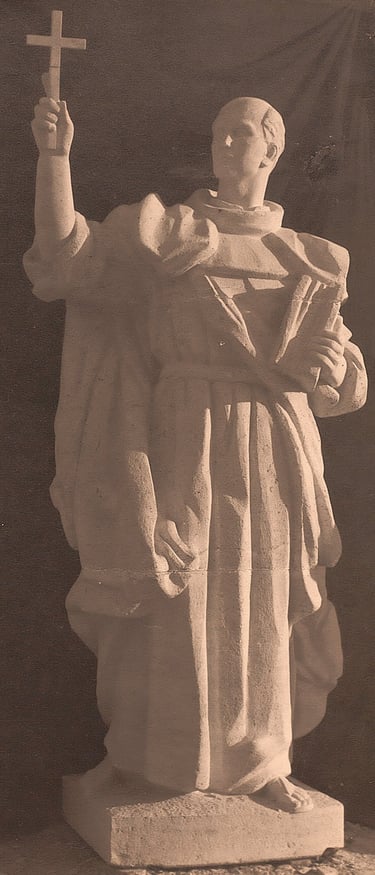
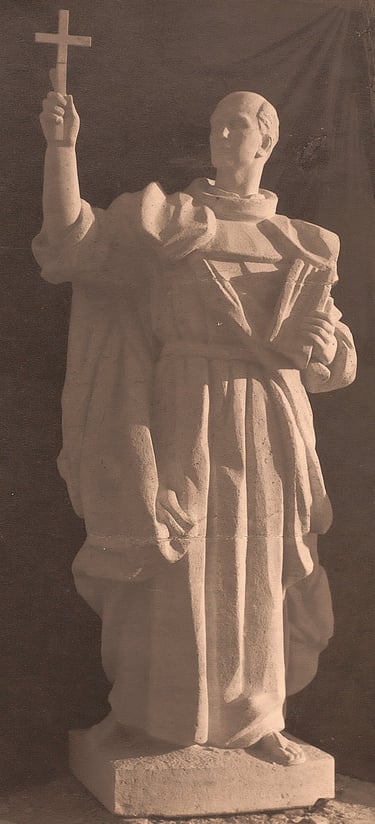
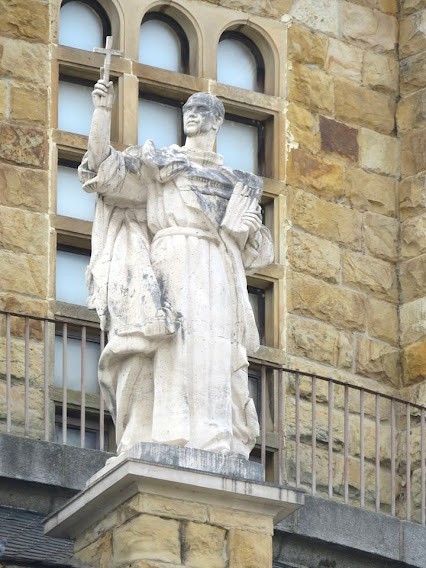
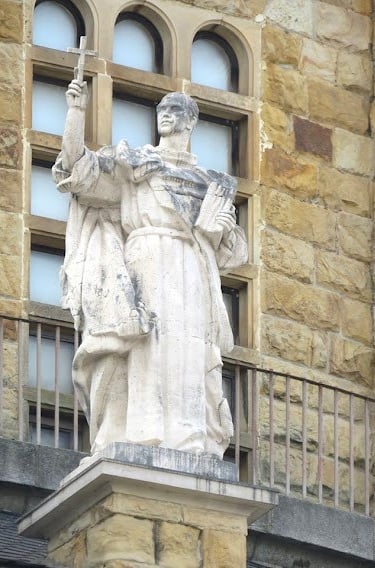
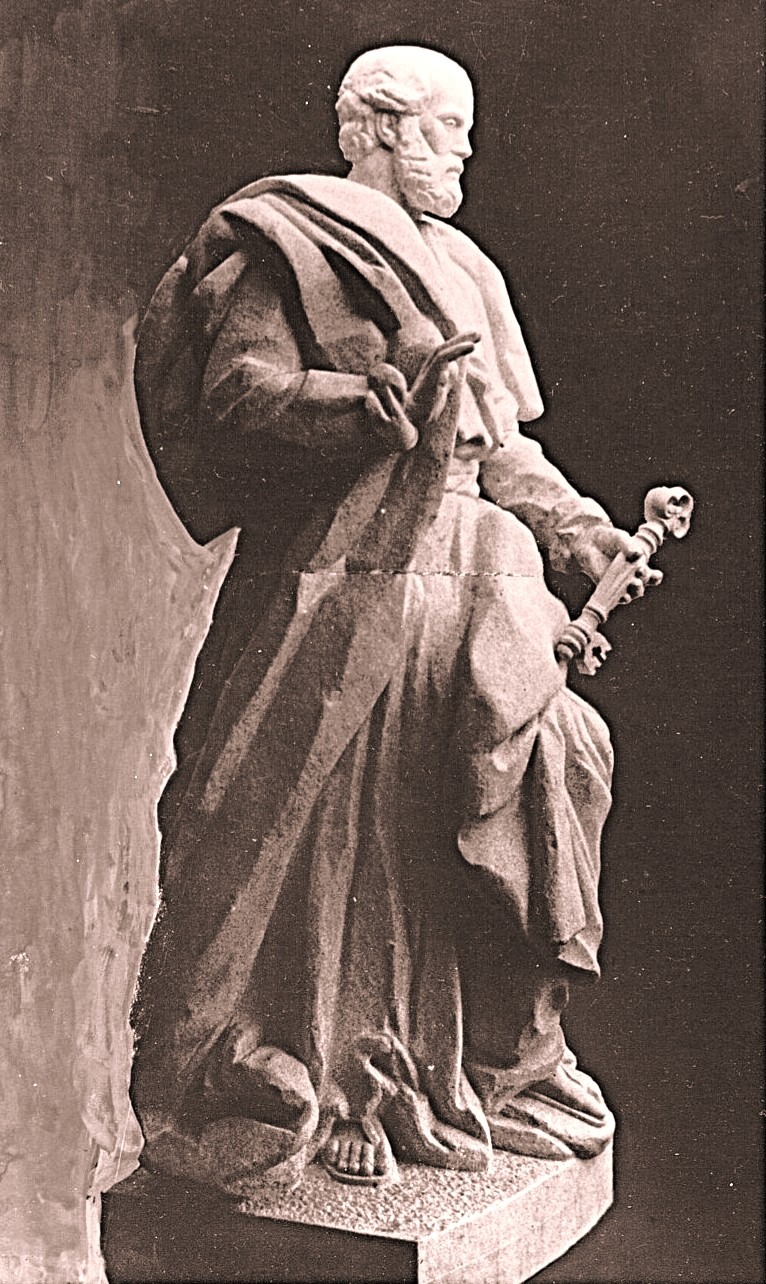
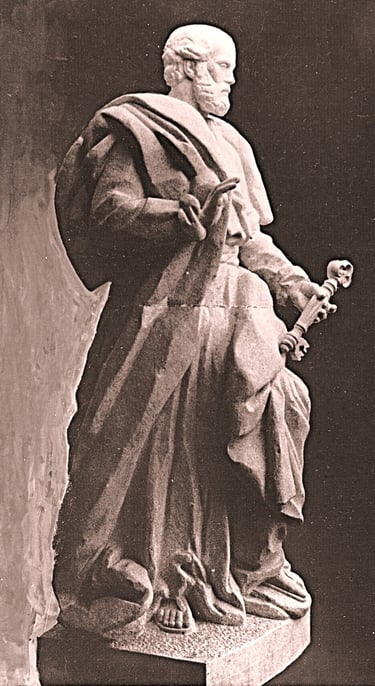
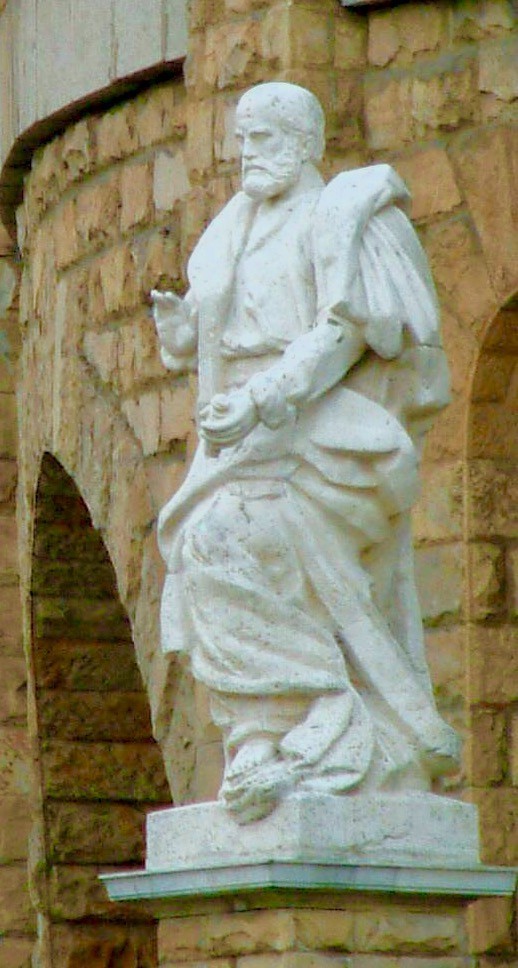
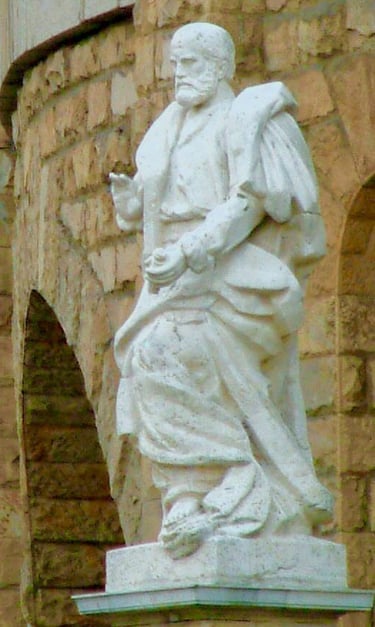
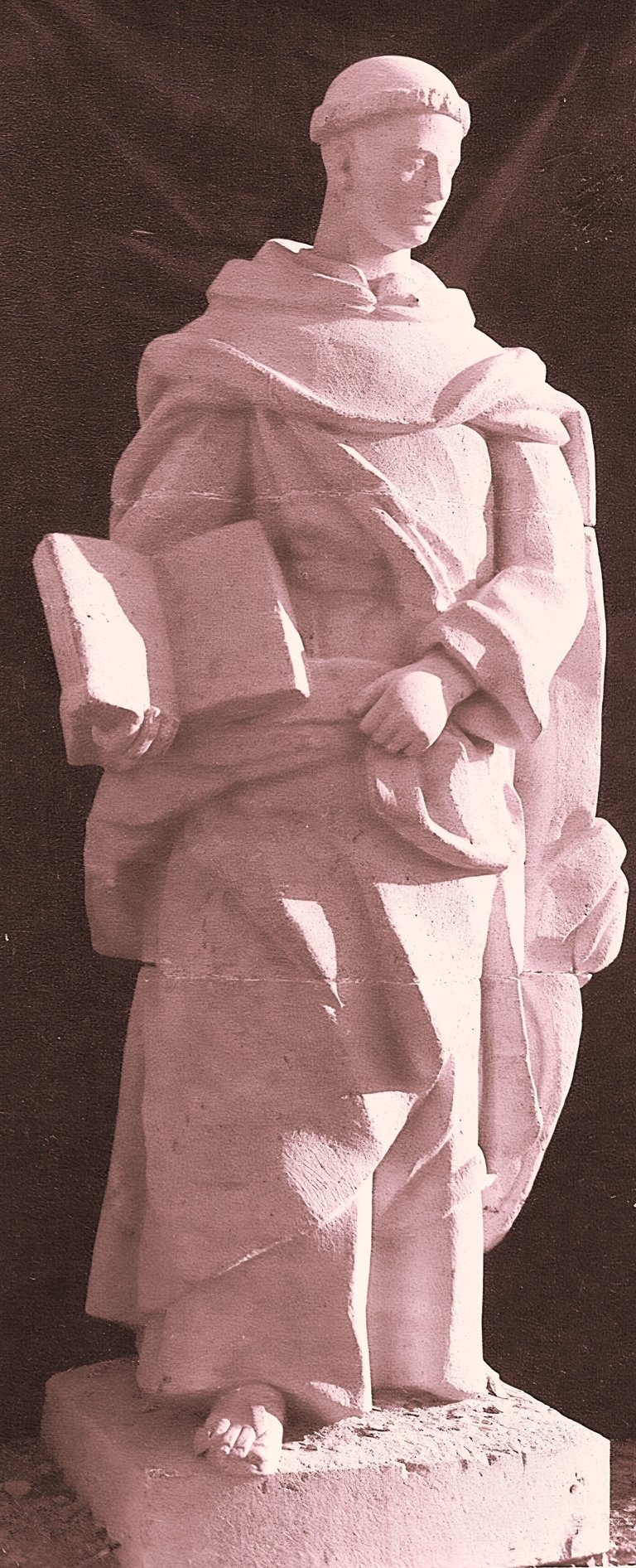
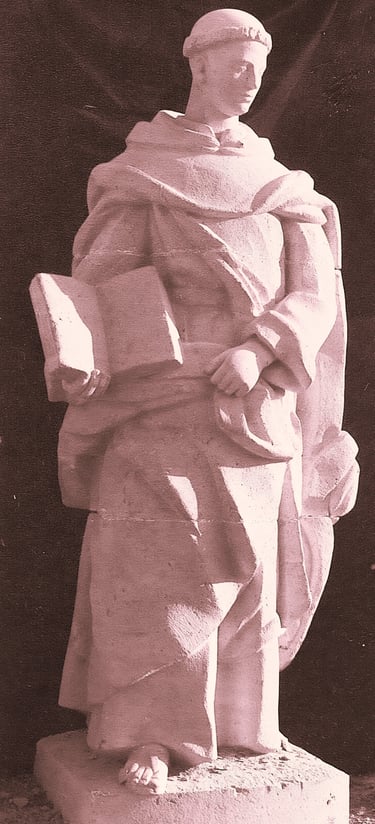





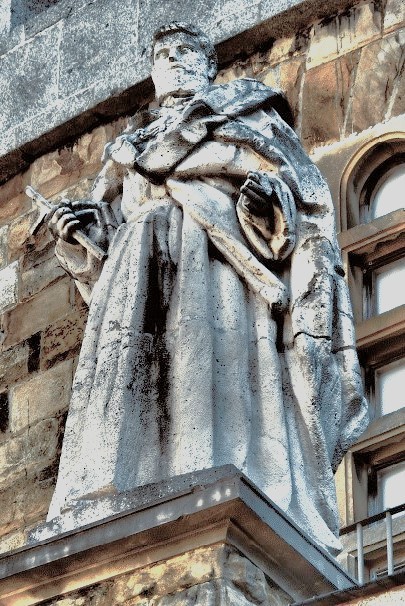
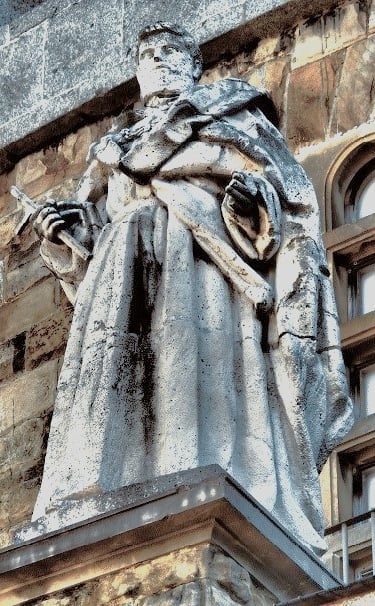
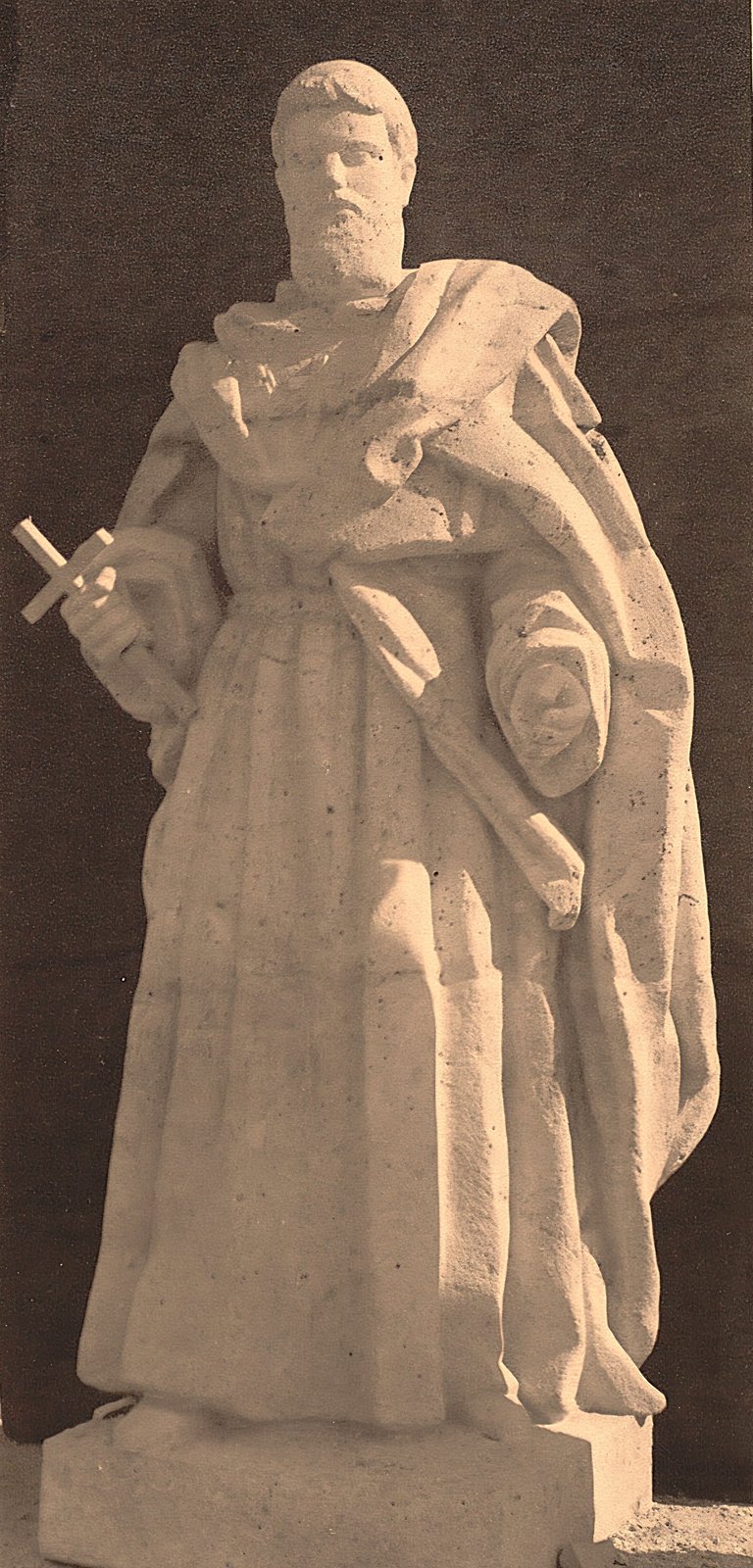

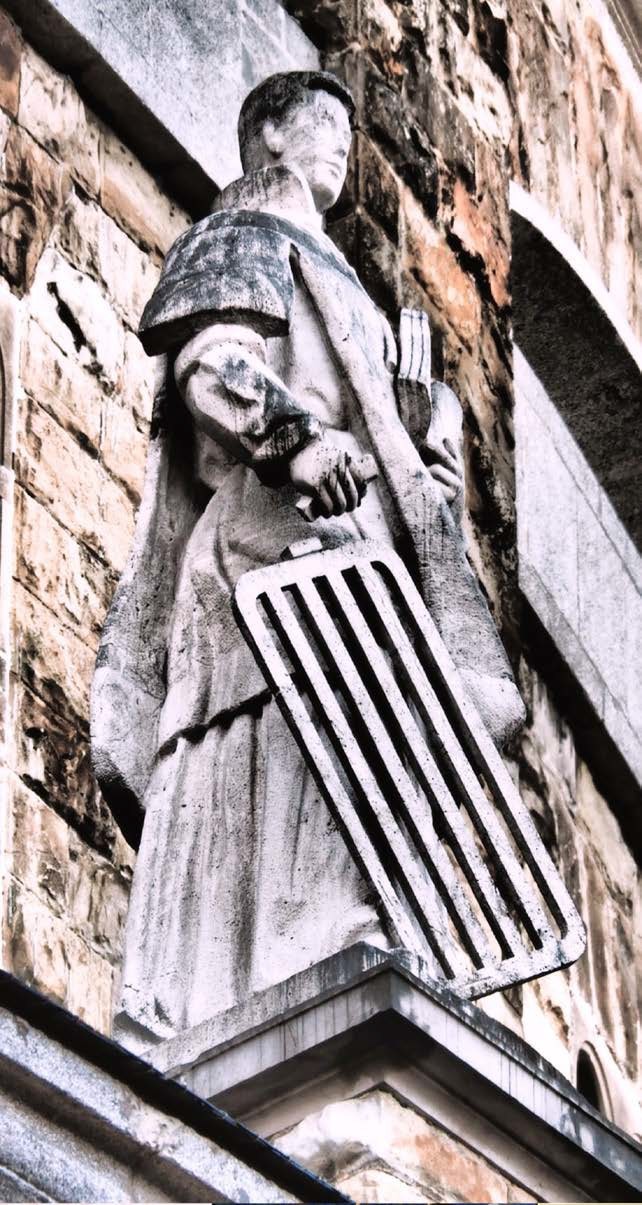


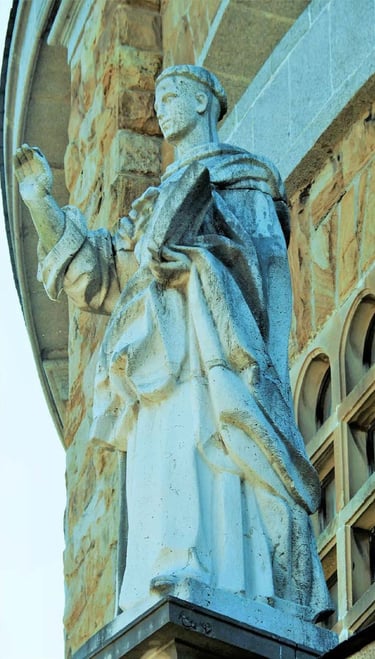
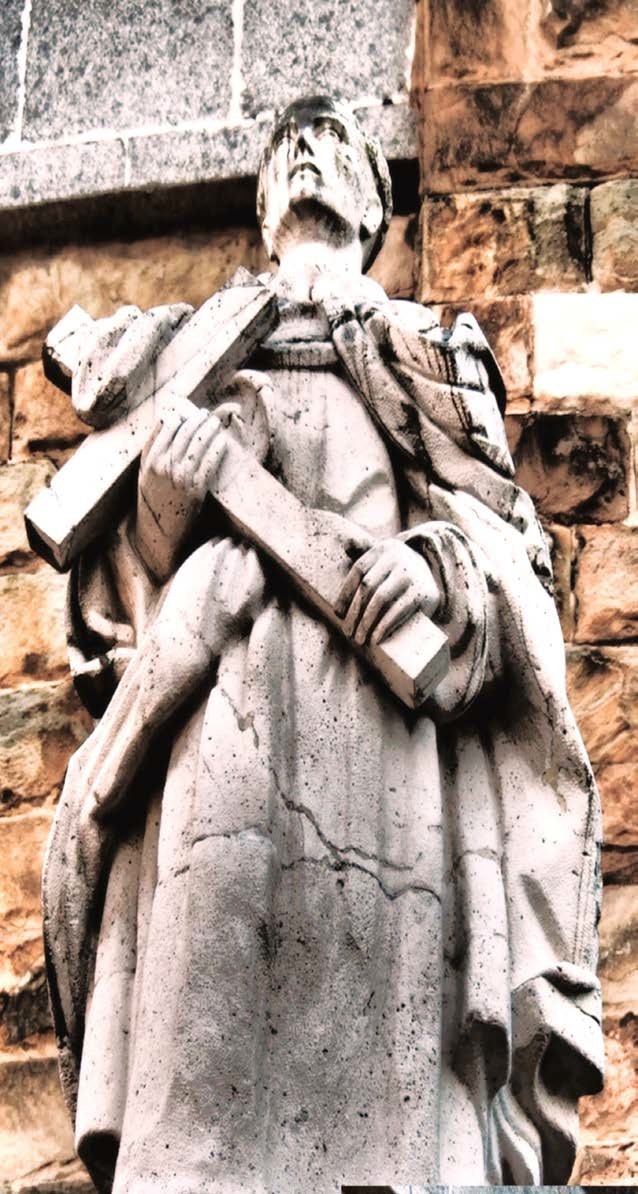
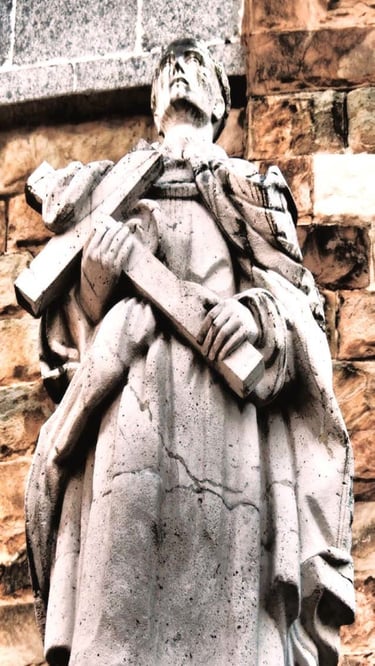
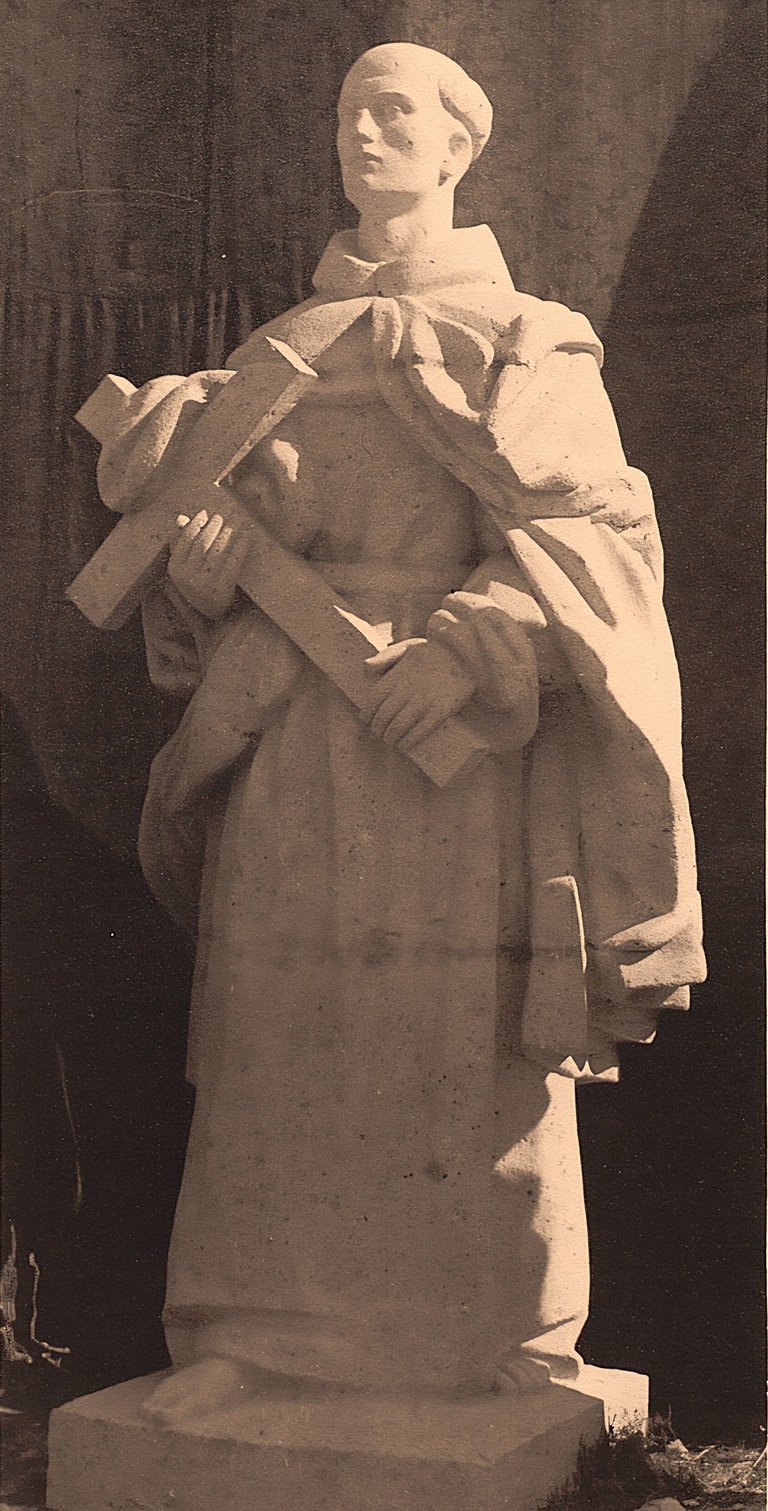
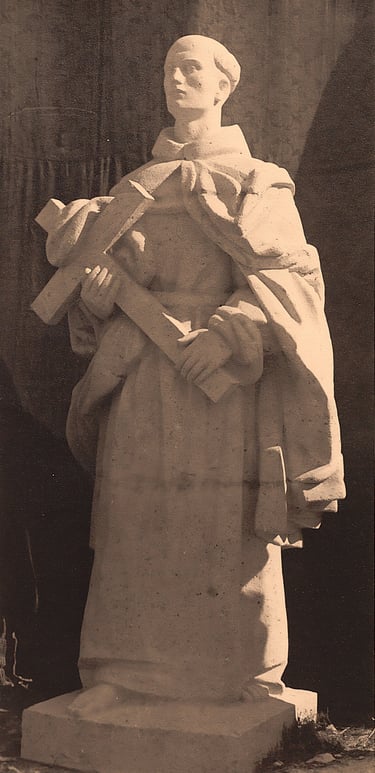
The nine statues set out below have not been found in the ETSAM archive


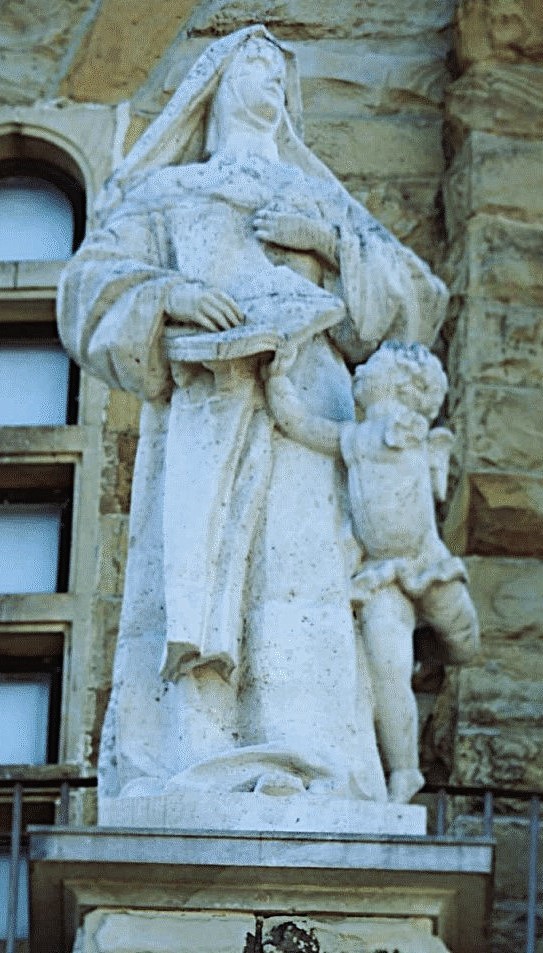

Saint Isidore the Labourer
Saint Teresa of Jesus
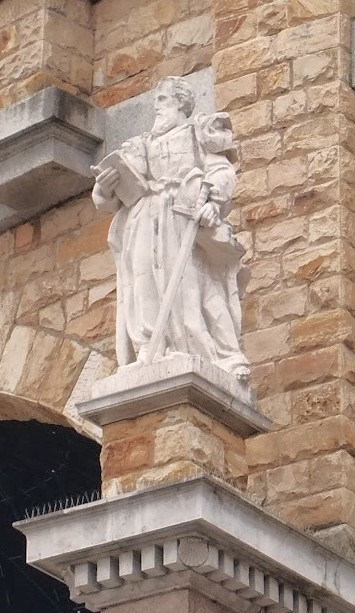
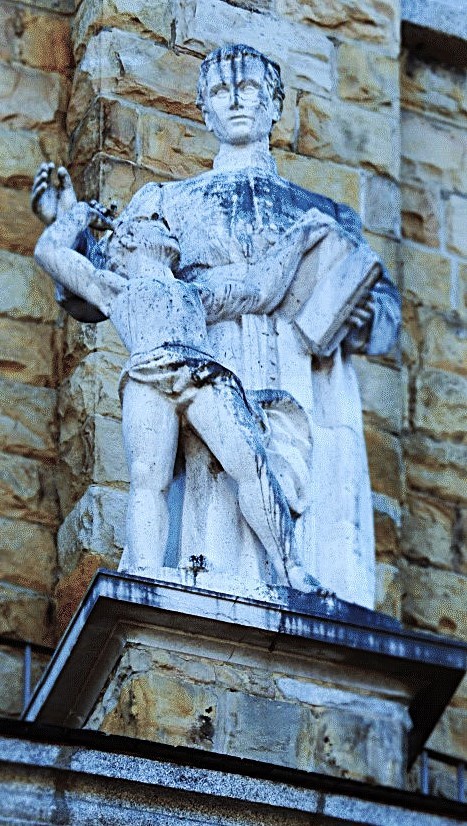
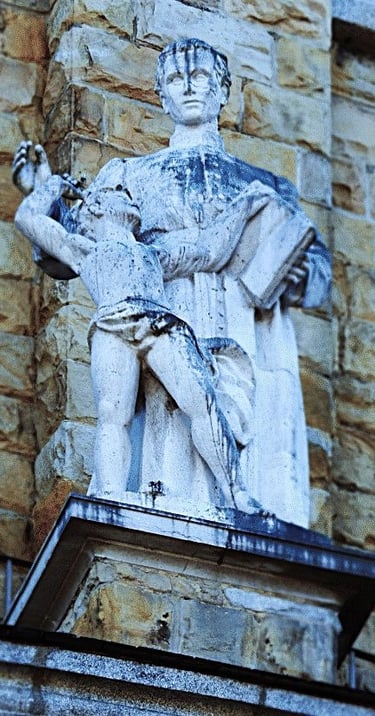
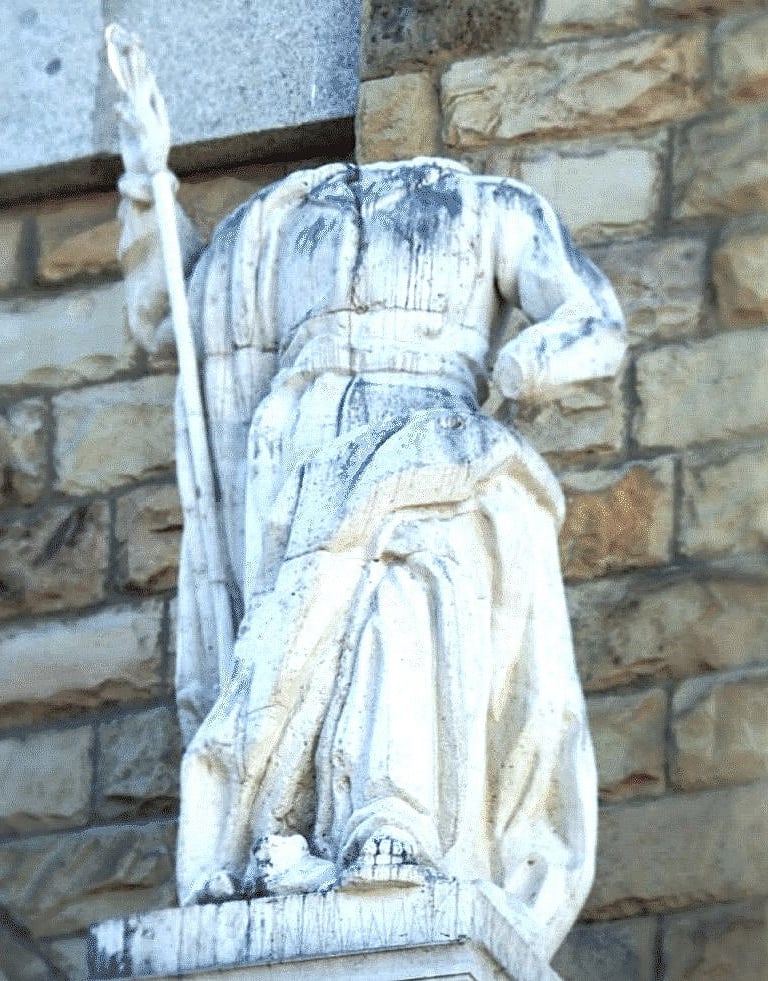

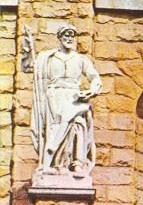
Saint John Bosco
Saint Paul
Saint Joseph the Worker, originally
Saint Joseph the Worker today
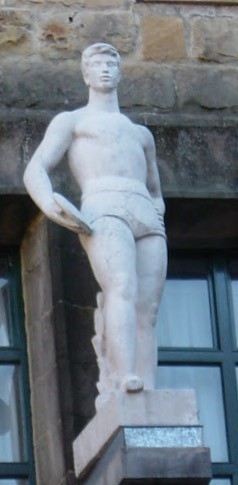
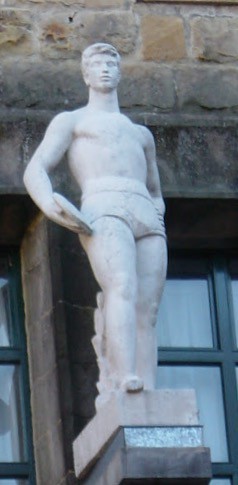
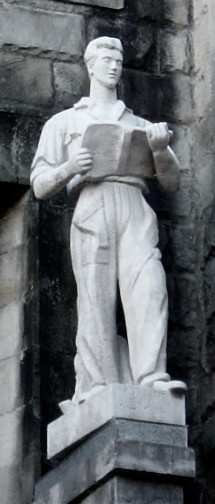


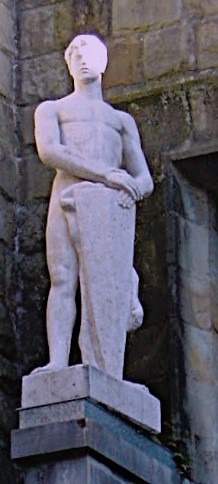
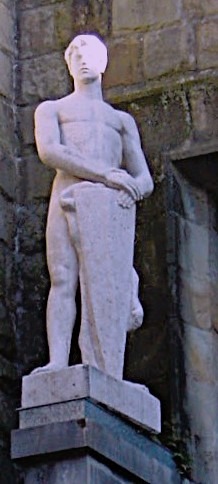

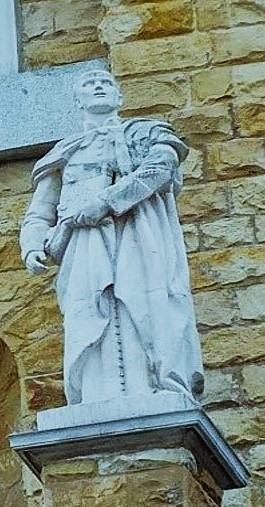
Allegory of study
Allegory of work
Allegory of discipline
Allegory of sport
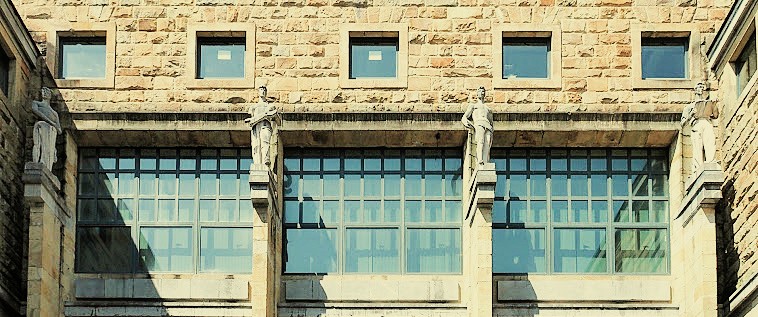
Location of the four statues in the Rocalla courtyard
Rafael Morán Rumoroso
info@universidad-laboral-gijon.es

